

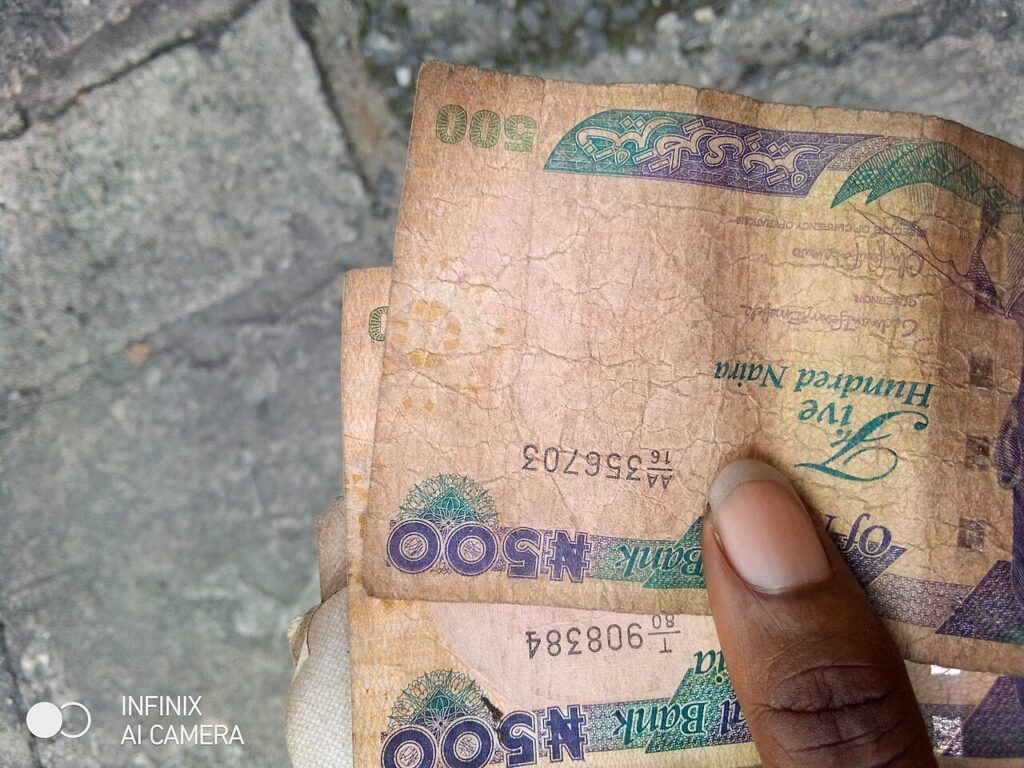
The naira exchange rate you see quoted as “official” is not a number the Central Bank of Nigeria (CBN) picks. Since June 2023 it has come from the prices at which banks buy and sell dollars on one market, the Nigerian Foreign Exchange Market (NFEM). On 21 October 2026 that market sold the dollar at ₦1,333.64, while street dealers asked about ₦1,380.
Why it matters: The rate decides what you pay for imported food, drugs, phones and fuel, and how far a school-fee or hospital payment abroad stretches.
Key facts at a glance
- On 14 June 2023 the CBN merged its separate currency windows into one and let buyers and sellers agree prices.
- Interbank dollar trades moved onto the Electronic Foreign Exchange Matching System (EFEMS) by 1 December 2024.
- EFEMS trades run from 9am to 4pm on business days, with a minimum deal of $100,000.
- On 21 October 2026 the official selling rate was ₦1,333.64 and the parallel rate about ₦1,380, a gap of about ₦46.
- Nigeria’s external reserves stood at $55.07bn on 9 October 2026, according to corrected CBN data.
Who sets the naira exchange rate?
Banks and their customers do. Before June 2023 Nigeria ran several windows, each with its own rate, and the CBN held the official rate close to a level it chose.
A CBN statement on 14 June 2023, signed by its then Director of Financial Markets, Angela Sere-Ejembi, ended that. All trades went to a single window, then called the Investors and Exporters window. The bank brought back what it called the “Willing Buyer, Willing Seller” model, meaning a deal goes through at whatever price both sides accept.
That window is now known as the NFEM.
How is the daily official rate worked out?
In a circular dated 2 October 2024, the CBN told banks to move interbank trading onto EFEMS “not later than December 01, 2024”. EFEMS is an electronic system that matches buy and sell orders and records each deal as it happens.
Guidelines dated 25 November 2024 set the rules. Banks are on the system by default, must trade with each other through it and must report deals within 10 minutes. Trades run from 9am to 4pm West Africa Time. The smallest deal is $100,000, and larger deals go up in steps of $50,000.
The CBN publishes the day’s rates from those trades on its Exchange Rates page. The 2023 statement said the rate for government transactions would be the weighted average of the previous day’s trades, so bigger deals carry more weight.
What makes the naira rise or fall?
The price moves with the supply of and demand for dollars.
Dollars come in from crude oil sales, foreign investors buying Nigerian assets, money sent home by Nigerians abroad and CBN sales from the reserves. Demand comes from importers, firms paying foreign suppliers and families paying for school fees, treatment and travel.
When more dollars arrive than people want to buy, the naira gains. When importers and travellers queue for dollars that are not there, it weakens.
Why is the black market rate higher?
The parallel or “black market” rate is set outside the NFEM, by bureau de change operators and cash dealers. It changes from city to city and from hour to hour, and nobody publishes it officially.
In April 2026 the official rate was ₦1,355.25 and the street rate ₦1,400, a gap of ₦44.75. That was up from ₦21.50 a month earlier, Nairametrics reported.
Aminu Gwadebe, president of the Association of Bureau De Change Operators of Nigeria (ABCON), told the paper that “speculation and arbitrage activity in the parallel market far outpace optimism in the official market”. Traders also blamed people holding on to dollars in the hope of a weaker naira, and slow supply of dollars to bureaux de change.
By 21 October the gap was about ₦46, using Techeconomy’s daily survey. A wide gap usually means dollars are hard to get through the banks.
Timeline
- 14 June 2023: The CBN merges its currency windows and lets the market set prices.
- 2 October 2024: A CBN circular orders interbank trades onto EFEMS.
- 25 November 2024: EFEMS guidelines are issued.
- 1 December 2024: Deadline for banks to trade on EFEMS.
- April 2026: The official and street rates are ₦44.75 apart.
- 21 October 2026: Official selling rate ₦1,333.64; street rate about ₦1,380.
What it means for you
Your bank’s rate will not match the CBN figure exactly. Banks add their own margin, and some transfers carry extra charges, so ask for the full cost before you pay.
If you need dollars for school fees or treatment abroad, your bank must process the request through the official market. Quotes from street dealers are not official, and the rate you are offered can differ from one dealer to the next.
Where can you check today’s rate?
- The official daily rate is on the CBN’s Exchange Rates page.
- Your own bank gives the rate you will actually pay.
- Parallel rates appear in daily surveys by Nigerian business media. Treat them as a guide only.
FAQ
Does the CBN fix the naira exchange rate? No. Since June 2023 the official rate has come from trades between banks on the NFEM. The CBN can still sell dollars from the reserves, and that extra supply can move the price.
What is EFEMS? It is the electronic system on which banks trade dollars with each other. It went live by 1 December 2024 and records each deal as it happens.
Why do the official and black market rates differ? They are different markets. Street dealers price cash dollars on their own supply and demand, and that price rises when dollars are scarce at the banks.
Related coverage
- Naira eases to N1,348/$ as CBN study links deficits to depreciation
- Tinubu asks Senate to approve $7.7bn external loan for 2026 budget
This article is for information only and is not financial advice.
Sources: CBN – Exchange rates · Channels TV – CBN confirms changes to FX market (full statement) · Arise News – CBN rolls out electronic FX matching system · Mondaq – Reforms in Nigeria’s FX market and EFEMS · Techeconomy – Dollar to naira, 21 October 2026 · Nairametrics – Naira depreciation widens exchange rate gap · Nairametrics – Corrigendum on external reserves

Join the conversation
Comments are moderated. Keep it respectful and on topic: no insults, hate, spam or personal details.