

President Bola Tinubu has asked the Senate to approve about $7.7bn (₦10.79trn) in new foreign loans to help fund the 2026 budget deficit. The Tinubu loan request, in a letter dated 26 October 2026, was read on the Senate floor by Senate President Godswill Akpabio on Wednesday, 4 November.
Why it matters: Every naira borrowed now has to be repaid with interest from future revenue, and the federal debt has nearly doubled since Tinubu took office.
Key facts at a glance
- Amount sought: ₦10,790,366,835,481, about $7.7bn at the 2026 budget rate of ₦1,409 to the dollar.
- Purpose: the foreign share of the 2026 deficit. The budget plans ₦29.2trn of new borrowing, ₦18.4trn of it at home.
- Eurobonds (dollar bonds sold to foreign investors) are the first choice.
- Akpabio sent the request to the Senate Committee on Local and Foreign Debt.
- Total public debt was ₦166.79trn at 30 June 2026, the Debt Management Office (DMO) says.
What is in the Tinubu loan request?
The 2026 Appropriation Act puts the budget deficit at about ₦31.4trn. It allows ₦29.2trn of new borrowing to cover most of the gap. The ₦10.79trn in this letter is the external part of that plan.
Tinubu listed several possible lenders. They include multilateral and bilateral lenders, the International Monetary Fund (IMF), bridge loans and Eurobond sales. He said Eurobonds come first because of their “relatively faster completion” and the large sums they can raise.
The money would go to projects in defence and security, transport, agriculture, power, education and health.
How much will the loans cost?
The letter fixes no interest rate or repayment period. Those will depend on “prevailing market conditions when the funds are raised”, it said. The Finance Ministry and the DMO would negotiate the terms.
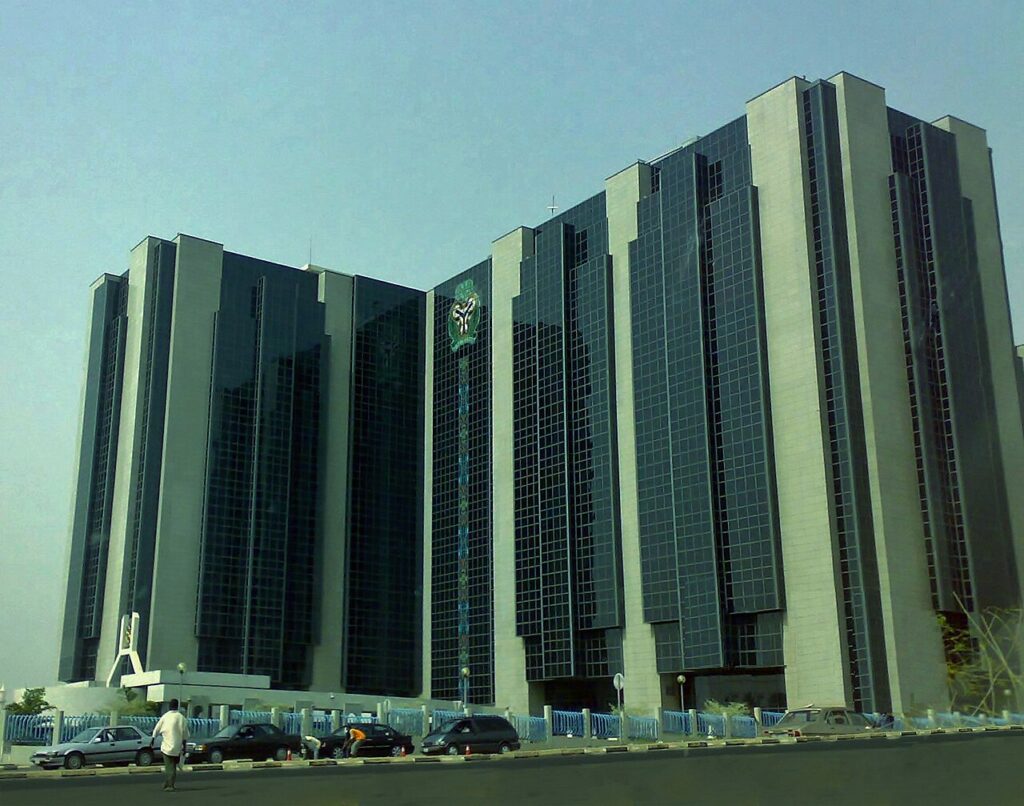
The Central Bank of Nigeria would receive the money for the government, which Tinubu said would add to foreign reserves and help steady the naira.
Why does the Senate have to approve it?
Sections 21(1) and 27(1) of the DMO Act 2003 say external borrowing must go before the National Assembly. Tinubu also asked lawmakers to authorise the Minister of Finance and the DMO to take the steps needed to raise the money.
What happened to the earlier request?
Akpabio said the new letter replaces an earlier request, which he put at “20.3 billion US dollars”, because the new one is “more explicit”. The figure does not match the plan reported on 27 October, which sought $20.52bn and €1.05bn for 2026 and 2027 projects. Neither the Senate nor the Presidency has explained the difference.
How big is Nigeria’s debt now?
DMO figures reported by The ICIR and PM News show total public debt of ₦166.79trn at 30 June 2026. That is up ₦7.44trn from ₦159.35trn at the end of March.
Domestic debt was ₦91.59trn and external debt ₦75.20trn. The figure stood at ₦87.38trn in June 2023, a month after Tinubu was sworn in.
Timeline
- June 2023: Total public debt is ₦87.38trn.
- July 2025: The Senate approves a $21.19bn, €4bn and ¥15bn borrowing plan for 2025 and 2026.
- 30 June 2026: Public debt reaches ₦166.79trn.
- 26 October 2026: Tinubu signs the $7.7bn letter.
- 27 October 2026: A separate $20.52bn and €1.05bn borrowing plan for 2026 and 2027 is made public.
- 4 November 2026: Akpabio reads the new letter and refers it to committee.
What it means for you
More borrowing means more of the government’s income goes on interest instead of roads, schools or salaries. Dollar loans also grow in naira terms whenever the naira weakens, so a fall in the exchange rate makes the debt heavier.
The request lands ten weeks before the 16 January 2027 presidential election, in which Tinubu is seeking a second term.
What happens next
The Committee on Local and Foreign Debt will report back to the full Senate, which will debate and vote. If lawmakers approve, the Finance Ministry and the DMO can start raising the money, with a Eurobond sale the likely first step.
FAQ
Is the $7.7bn on top of the $20.52bn plan? Akpabio said the new letter supersedes an earlier request, but the two figures do not match and neither the Senate nor the Presidency has said how they fit together.
What is a Eurobond? It is a bond sold in dollars to foreign investors, who are repaid with interest over a fixed number of years.
Does the Senate usually approve these requests? Lawmakers approved the $21.19bn, €4bn and ¥15bn plan for 2025 and 2026 in July 2025, after it was first sent in May.
Related coverage
- Nigeria external debt rises to $145bn in 2025, World Bank says
- Reps approve $516.33m loan for Sokoto-Badagry superhighway
This article is for information only and is not financial advice.
Sources: The ICIR – Tinubu seeks Senate nod for fresh $7.7bn loan · PM News – Tinubu writes Senate on ₦10.79trn loan · TheCable – Senate approves Tinubu’s $21bn borrowing plan




Join the conversation
Comments are moderated. Keep it respectful and on topic: no insults, hate, spam or personal details.