

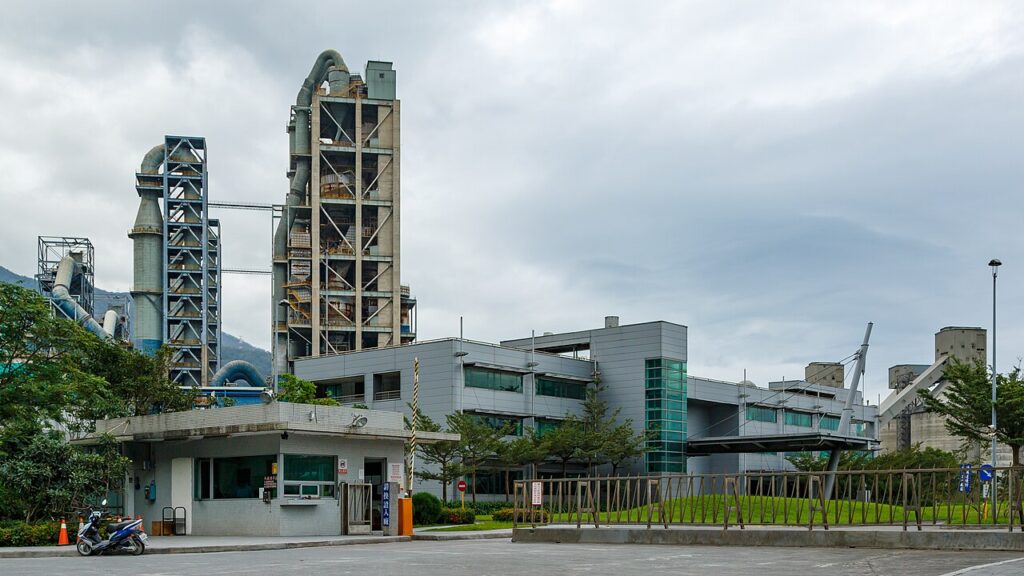
Aliko Dangote says his company paid interest of 40 per cent to Nigerian banks on loans used to build the Obajana cement plant in Kogi State. The Dangote Obajana interest figure came in a speech on Thursday at the 25th annual conference of Women in Management and Business (WIMBIZ) in Lagos, according to reports by The Telegraph, TheNigeriaLawyer and Arbiterz.
Why it matters: the cost of borrowing still decides whether Nigerian firms can build factories and create jobs, and Dangote’s account shows how high that cost once was.
Key facts at a glance
- Dangote said the company paid 40 per cent interest to local banks when it built Obajana.
- The project was first costed at $180 million and ended at about $1 billion, the reports said.
- Nigerian banks then had capital of about ₦25 billion, Dangote said.
- The International Finance Corporation (IFC) gave the company seven years to repay, including a two-year break.
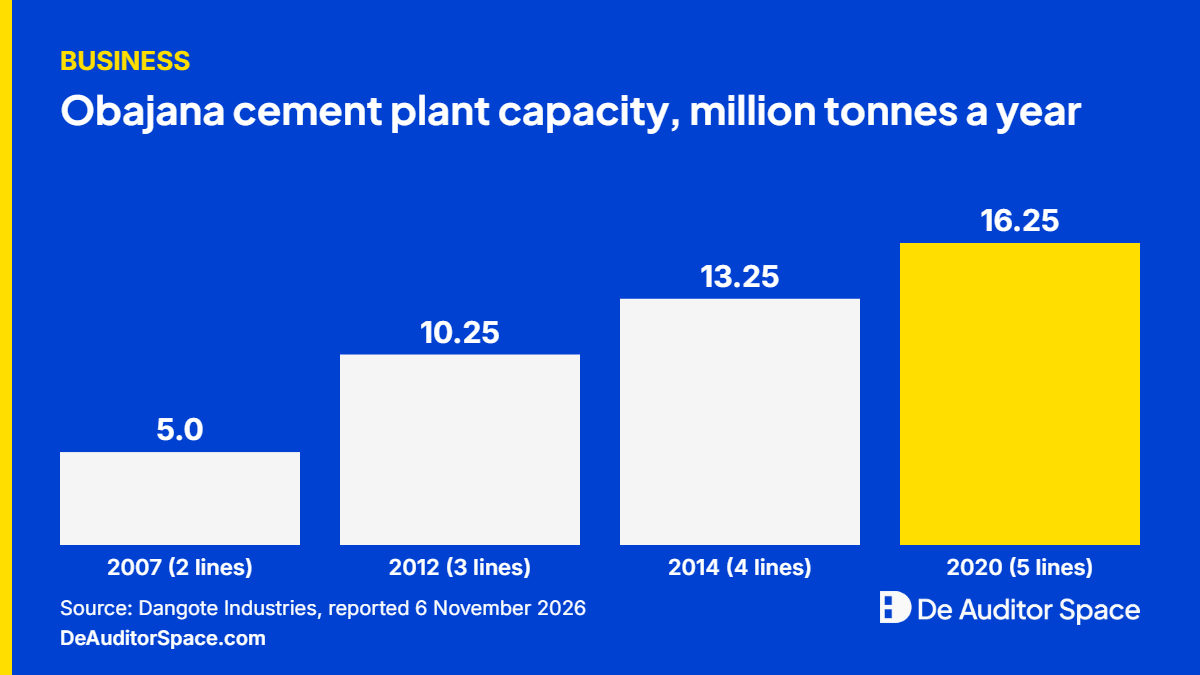
- Obajana now has five lines with capacity of 16.25 million tonnes a year.
What did Dangote say about Obajana interest?
Dangote, president of Dangote Industries Limited, told the audience the company took on a $180 million project “when the banks were at ₦25bn capital”. He did not name the lenders.
“We were paying interest at 40 per cent to the local banks. They can check the records,” he said, as quoted by The Telegraph and TheNigeriaLawyer.
He said the company also borrowed from the IFC, the World Bank Group’s private-sector arm. He wanted to repay within three years. “They gave us seven years,” he said, with no payment in the first two.
He told the audience he cleared the local bank debt early. “I invited the bankers to dinner, and at the end of the dinner, I gave everybody their cheque,” he said.
Why did the Obajana cost rise to $1bn?
Dangote said the firm did not first build its own gas pipeline, fuel supply or power plant. It expected public power to be enough. When that failed, the plant needed its own infrastructure, which pushed the bill towards $1 billion, more than five times the first estimate.
He urged women in business to “think very, very big” and not to let anyone tell them a project cannot be done.
How does 40% compare with rates today?
The 40 per cent figure is historical. Dangote did not give the year of the loans. Today the Central Bank of Nigeria’s Monetary Policy Rate (MPR), the benchmark rate that guides what banks charge, stands at 23 per cent. The CBN cut it from 26.5 per cent at its 307th Monetary Policy Committee meeting in September, according to the Lagos Chamber of Commerce and Industry.
Commercial bank lending rates are usually set above the MPR.
Obajana timeline
- 2007: Obajana starts production with two lines and 5 million tonnes a year.
- 2012: a third line lifts capacity to 10.25 million tonnes.
- 2014: a fourth line adds 3 million tonnes.
- 2020: a fifth line takes capacity to 16.25 million tonnes.
- 5 November 2026: Dangote recalls the 40 per cent loans at WIMBIZ.
What it means for you
High interest rates feed into the price of cement and other goods, because factories pass on their finance costs. Dangote’s account also shows why repayment terms matter: the IFC loan gave the company two years before the first payment.
What happens next
The CBN’s next MPC decision will show whether borrowing costs keep falling. Dangote also told the audience his refinery now runs at 710,000 barrels a day.
Related coverage
- Nigeria external debt rises to $145bn in 2025, World Bank says
- Ibom Deep Seaport: Tinubu approves port first cleared in 2015
- CBN stablecoin rules: ₦15bn capital bar for dollar token issuers
This article is for information only and is not financial advice.
Sources: The Telegraph: We paid 40% interest on bank loans to build Obajana · TheNigeriaLawyer: Dangote recalls Obajana financing struggle · Arbiterz: I paid 40% interest on loans for Obajana · NewsClick: We paid 40% interest on Obajana loans · LCCI: Statement on MPC decision, September 2026

Join the conversation
Comments are moderated. Keep it respectful and on topic: no insults, hate, spam or personal details.