

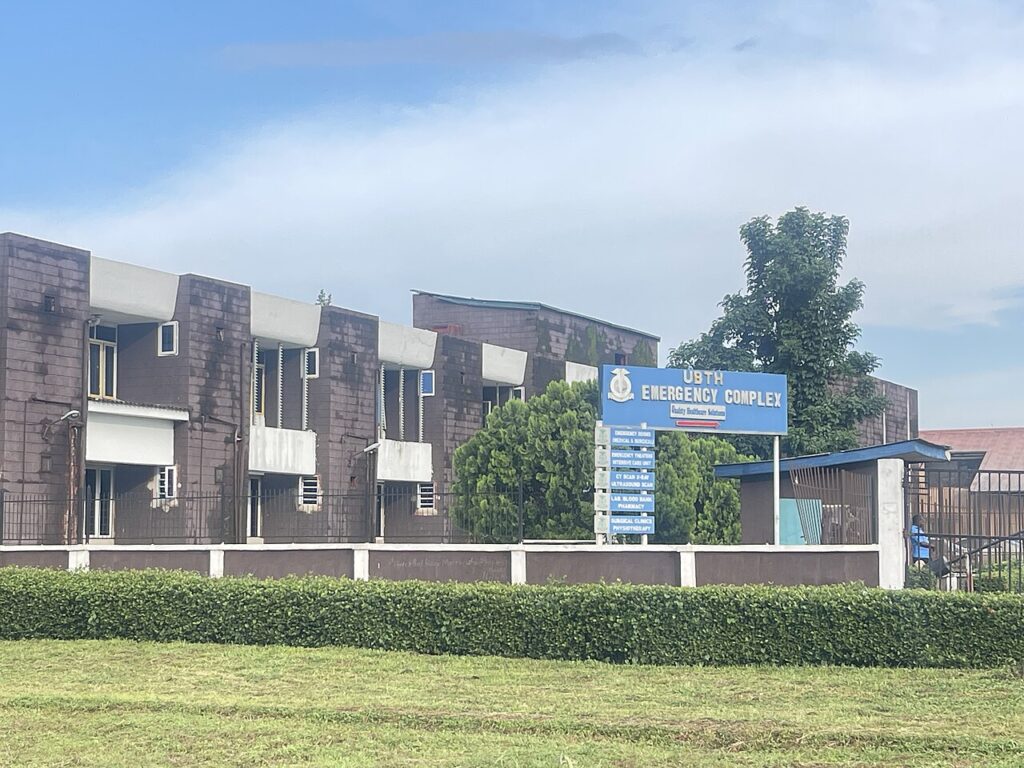
The Nigerian Association of Resident Doctors (NARD) has threatened a nationwide strike if the Senate goes ahead with a bill that could send doctors to jail for up to six months for delaying emergency treatment. The NARD strike threat came in a statement by its president, Dr Ogar Idoko, issued in Calabar and reported on Friday.
Resident doctors are qualified doctors training as specialists in teaching hospitals and federal medical centres.
Why it matters: If the bill passes unchanged, a patient’s first three hours in an emergency room would be governed by legal deadlines, and a walkout by resident doctors would hit public hospitals first.
Key facts at a glance
- The bill is the National Health Act (Amendment) Bill 2026, sponsored by Senator Abdulaziz Musa Yar’Adua (Katsina Central).
- It passed second reading on Wednesday, 4 November, and went to the Senate health committee, which has four weeks to report.
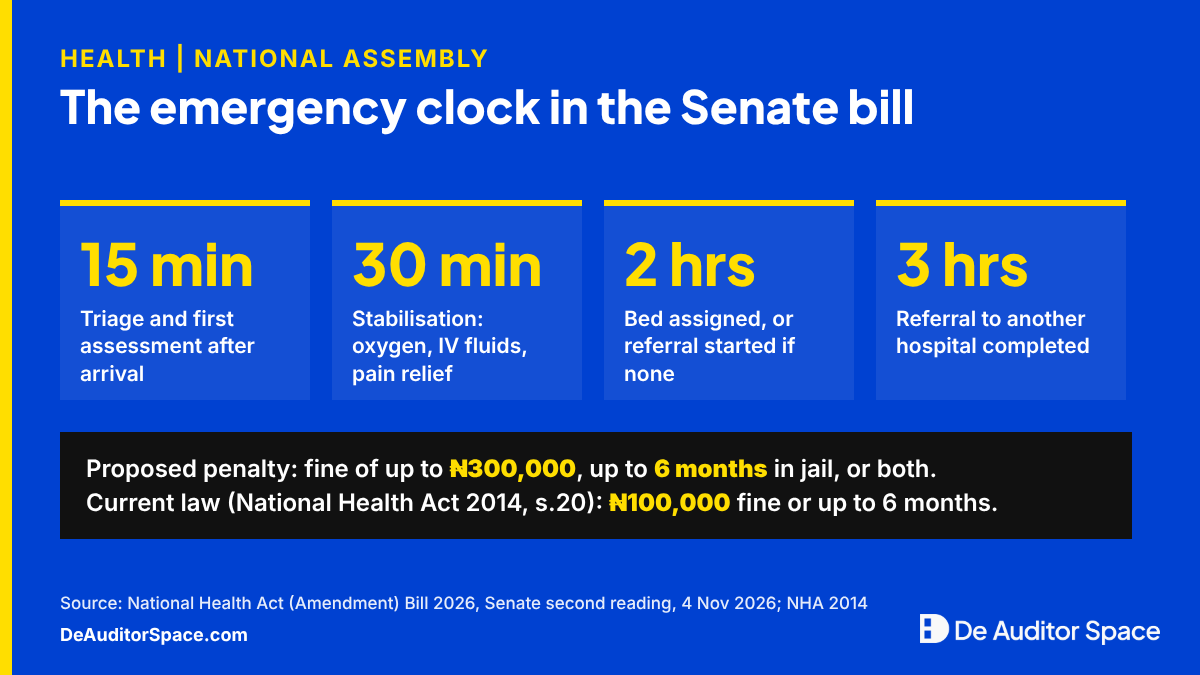
- Hospitals would have 15 minutes to assess an emergency patient and 30 minutes to stabilise them.
- Offenders face a fine of up to ₦300,000, up to six months in jail, or both. The current law sets a ₦100,000 fine.
- NARD wants the penalty clauses withdrawn and says it will consider all lawful options, including a strike.
What does the emergency treatment bill say?
According to TheNigeriaLawyer and Daily Trust, which reported the Senate sitting, the bill sets a clock for every emergency patient. Triage (sorting patients by how sick they are) must start within 15 minutes of arrival. A trained and certified nurse may do it where no doctor is available.
Basic stabilisation, including oxygen, intravenous fluids and pain relief, must follow within 30 minutes. Life-saving steps such as CPR and bleeding control must start at once when a patient’s life is at risk.
A hospital must find the patient a bed within two hours, if one is available. If none is free, it must stabilise the patient and begin a referral within two hours, then complete the transfer within three hours. An ambulance or other transport must be sent within 30 minutes of the decision to refer.
The bill would also require the Medical and Dental Council of Nigeria and the Nursing and Midwifery Council to draw up a national emergency care curriculum. Emergency staff would be retrained and certified at least every 18 months.
How much tougher is the penalty than the current law?
Section 20 of the National Health Act 2014 already bars any health worker or hospital from refusing a person emergency treatment. It sets a fine of ₦100,000, up to six months in prison, or both, according to the text of the Act.
The new bill keeps the six-month ceiling but triples the maximum fine to ₦300,000. Its real change is the timelines, which would turn a broad duty into deadlines measured in minutes. New Telegraph reported that health workers acting in good faith, within documented shortages, would be protected.
NARD strike threat: why are resident doctors opposed?
NARD said it supports quick emergency care but argued that the bill blames doctors for problems they did not create. Idoko pointed to old equipment, too few staff, unreliable power and short emergency supplies. “You cannot legislate oxygen into an empty cylinder, electricity into a dark operating theatre,” the association said, as quoted by Premium Times.
“The challenges are consequences of longstanding institutional neglect rather than professional negligence,” Idoko said, according to Naija News.
The association asked lawmakers to consult health bodies, hospital managers and patient groups. It also wants public office holders made to use government hospitals at home, with sanctions for avoidable treatment abroad at public cost.
Did any senator raise the same worry?
Yes. During the debate, Senator Francis Faduyile (Ondo South) warned against criminalising health workers without fixing shortages of doctors, oxygen and equipment, New Telegraph reported. Senate Chief Whip Mohammed Monguno backed the bill, citing deaths from road crashes and childbirth emergencies. Minority Leader Abba Moro criticised hospitals that demand police reports before treating emergencies.
Background: Nigeria’s emergency care laws
- 2001: African leaders sign the Abuja Declaration, pledging 15% of national budgets to health. Nigeria has not met it.
- 2014: The National Health Act bans refusal of emergency treatment, with a ₦100,000 fine or six months in jail.
- 2017: The Compulsory Treatment and Care for Victims of Gunshot Act requires hospitals to treat gunshot victims without a police report or deposit.
- 4 November 2026: The Senate passes the emergency treatment amendment bill for second reading.
- 6 November 2026: NARD rejects the penalty clauses and threatens a nationwide strike.
What it means for you
Nothing changes yet. The bill is not law, and its penalties cannot be enforced until it passes the Senate and the House of Representatives and is signed by the President. The existing duty under the 2014 Act still applies, so no hospital may lawfully turn away an emergency patient today.
A strike would affect federal teaching hospitals, including the University of Benin Teaching Hospital and Irrua Specialist Teaching Hospital in Edo State. NARD said it would make arrangements to protect emergency and critically ill patients if its members walk out.
What happens next
The Senate health committee is due to report back within four weeks, which points to early December. A public hearing is expected before then. NARD said its decision-making organs would meet to weigh a strike if lawmakers press ahead with the penalty clauses.
Related coverage
- Senate halts bills for new federal universities, polytechnics
- UniAbuja land: Wike dismisses ASUU strike threat
- Lagos HIV survey: 4 in 10 people living with HIV don’t know it
Sources: Premium Times – Resident doctors reject proposed six-month jail term · The Eagle Online – Doctors kick bill proposing six-month jail term · Naija News – NARD kicks against bill · TheNigeriaLawyer – Senate advances emergency care bill · New Telegraph – Senate passes National Health Act amendment for second reading · Daily Trust – Senate proposes six-month jail term, ₦300,000 fine · Tribune – Doctors and right to emergency medical treatment




Join the conversation
Comments are moderated. Keep it respectful and on topic: no insults, hate, spam or personal details.