

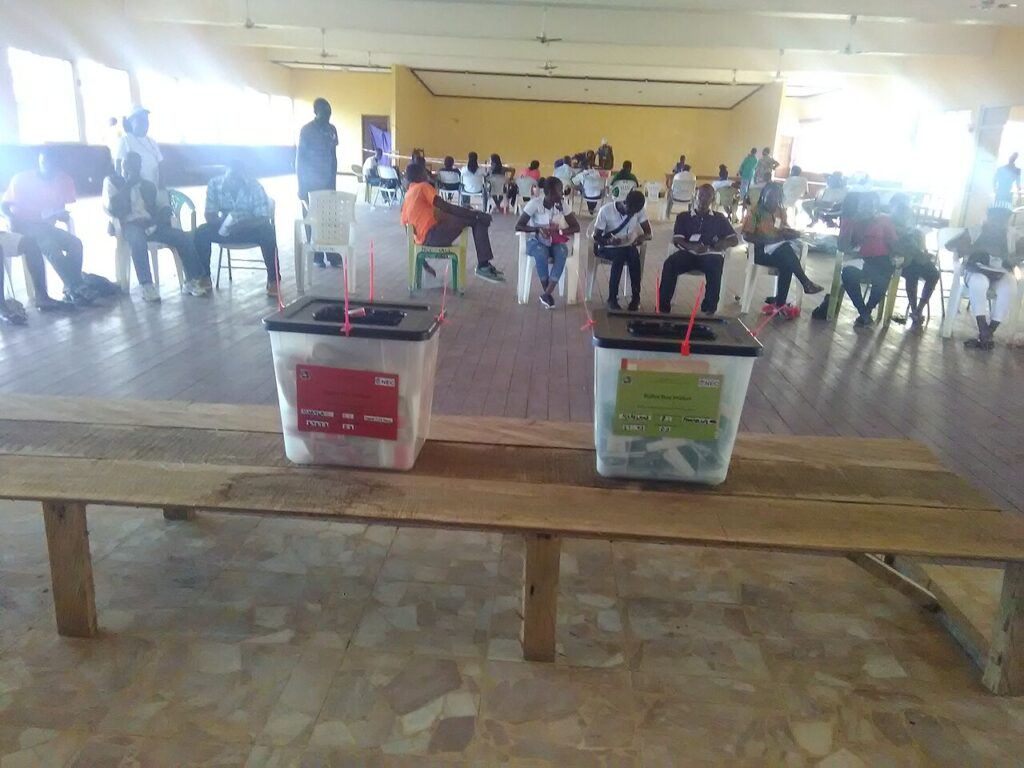
Oyo State Governor Seyi Makinde, the presidential candidate of the Allied Peoples Movement (APM), has told Nigerians to take money from politicians and still vote for the candidate they want. Nigeria’s new Electoral Act treats that advice as a route to a criminal offence: vote buying in Nigeria is illegal for the person who pays and for the voter who receives.
Mr Makinde spoke on Saturday, 7 November, in Bauchi at the flag-off of the APM presidential campaign, Premium Times reported. The presidential election is 69 days away, on 16 January 2027.
Why it matters: cash-for-votes is one of the oldest problems in Nigerian elections, and the penalties under the Electoral Act 2026 are far heavier than before.
Key facts at a glance
- Makinde told supporters in Bauchi to collect money from politicians but “vote your heart”.
- The Electoral Act 2026 makes buying and selling votes an offence, with a minimum fine of ₦5 million, at least two years in prison, or both, according to a Dataphyte review of the law.
- A conviction under that section also bars a person from contesting elections for at least 10 years.
- In 2023, 22% of Nigerian voters said they were personally offered money or favours for their vote, up from 17% in 2019.
- The presidential and National Assembly elections hold on 16 January 2027; governorship polls follow on 6 February.

What did Makinde say in Bauchi?
Speaking to APM supporters at the campaign launch, the governor said money offered by politicians belongs to the people. “Don’t bother at all when they bring money, it is your money. Collect it, spend it, but vote your heart,” he said, according to Premium Times.
He went on to argue that hunger is the biggest problem facing Nigerians and pitched his “Reset Agenda” as the answer to hunger, insecurity and the exclusion of many people from government.
Bauchi State Governor Bala Mohammed, described by Premium Times as the APM national leader, also spoke at the event. He said both men left the Peoples Democratic Party (PDP) because of what he called injustice in the party, and asked Mr Makinde not to sideline Bauchi and the North-east in appointments if he wins.
Is vote buying in Nigeria a crime for the voter too?
Yes. Nigerian electoral law has long punished the voter who takes money as well as the person who offers it. In an interview with the News Agency of Nigeria in August, published by Peoples Gazette, lawyer Jenifer Achimuagole-Obia said a voter commits an offence by receiving, or agreeing to receive, money, a gift or a job in return for voting or staying away.
“A voter cannot escape liability simply because he or she is the recipient of the inducement,” she said.
President Bola Tinubu signed the Electoral Act 2026 in February. According to an analysis by Dataphyte, the law’s Section 22, which previously dealt only with buying or selling another person’s Permanent Voter Card (PVC), now names vote buying and vote selling directly.
What are the penalties under the Electoral Act 2026?
Dataphyte’s reading of the new law sets out two tracks:
- Section 22 (vote buying and selling): a minimum fine of ₦5 million, at least two years in prison, or both, plus a ban of at least 10 years from contesting elections. Under the 2022 Act, the old maximum was ₦500,000 or two years.
- Section 125 (electoral bribery, formerly Section 121): the fine for offering a bribe rises from ₦500,000 to ₦2 million. The penalty for receiving a bribe stays at a maximum of ₦500,000 or 12 months in prison.
So the old maximum fine for vote trading is now the new floor, multiplied by ten. A voter who takes cash at a polling unit could, in principle, face either provision, depending on how prosecutors bring the charge.
The Independent National Electoral Commission (INEC), the police, the Economic and Financial Crimes Commission (EFCC) and the Independent Corrupt Practices and Other Related Offences Commission (ICPC) all have roles in detecting and prosecuting election offences.
Why do politicians keep saying “collect the money”?
Mr Makinde is not the first leader to give this advice. On 18 March 2023, after voting in the governorship election in Daura, Katsina State, then-President Muhammadu Buhari told Nigerians to collect money from vote buyers but vote for the candidate they preferred, Nairametrics reported at the time.
The advice lands differently today because more Nigerians are poor. Survey data from the National Bureau of Statistics (NBS) and the United Nations Office on Drugs and Crime (UNODC), compiled by Dataphyte, show the share of voters offered money or favours for their votes rose from 17% in 2019 to 22% in 2023. Over the same period, the poverty rate rose from about 40.1% to 56%.
The World Bank now puts poverty at 63% for 2025, or about 140 million people. Dataphyte notes that the figures do not prove that poverty caused the rise in vote buying, but the two moved together.
Background: the road to January 2027
- 18 March 2023: Buhari tells voters in Daura to collect politicians’ money but vote their choice.
- February 2026: President Tinubu signs the Electoral Act 2026, with tougher penalties for vote trading.
- 2026: INEC’s timetable fixes the presidential and National Assembly elections for 16 January 2027 and governorship polls for 6 February.
- 22 October 2026: INEC’s final list shows 18 presidential candidates from 18 parties, Vanguard reports.
- 7 November 2026: Makinde flags off the APM presidential campaign in Bauchi.
What it means for you
If someone offers you cash, food or a job to vote a certain way, taking it can expose you to prosecution under the Electoral Act, even if you then vote for someone else. Your ballot is secret, but the exchange of money is not protected by that secrecy. Suspected vote buying can be reported to INEC officials, the police or security agents at the polling unit.
What happens next
Campaigns continue across the country ahead of the 16 January vote. The governorship and State House of Assembly elections hold on 6 February 2027. Under the INEC timetable, these are the first general elections to be held under the Electoral Act 2026.
Frequently asked questions
Is it illegal to collect money from politicians in Nigeria?
Yes. Electoral law makes it an offence to receive or agree to receive money, gifts or other benefits in exchange for voting or not voting. The voter and the person paying can both be charged.
What is the penalty for vote buying in Nigeria?
Under Section 22 of the Electoral Act 2026, according to Dataphyte, vote buying or selling attracts a minimum fine of ₦5 million, at least two years in prison, or both, and a 10-year ban from contesting elections.
When is the 2027 presidential election?
The presidential and National Assembly elections hold on Saturday, 16 January 2027. Governorship and State House of Assembly elections hold on 6 February 2027.
Related coverage
- Tinubu Rivers rally: Fubara pledges 3 million votes for 2027
- Atiku convoy attack: Amnesty demands probe of Kebbi violence
- Electoral Act 2026: Obi faults dropping of certificate forgery ground
Sources: Premium Times: Makinde tells Nigerians to collect money, vote conscience · Dataphyte: Can harsher penalties stop vote-trading? · Peoples Gazette/NAN: Politicians, voters warned against vote buying · Vanguard: When is the 2027 election? · Nairametrics: Buhari urges voters to collect money, 2023




Join the conversation
Comments are moderated. Keep it respectful and on topic: no insults, hate, spam or personal details.