

Opinion
The Iran war cost is now big enough to be felt in Washington, in American homes and in fuel markets far from the Gulf. That alone should push the United States and Iran back to the negotiating table.
Why it matters: When the Strait of Hormuz is blocked, fuel costs more almost everywhere, including in Nigeria and the rest of Africa.
How much has the Iran war cost the US so far?
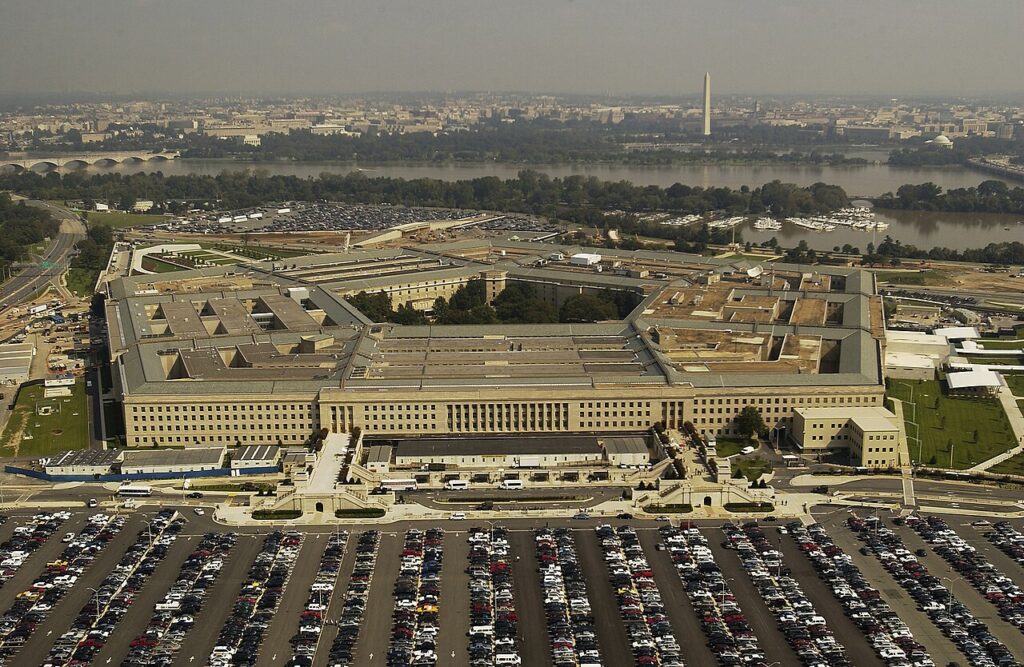
The Pentagon’s comptroller, Jay Hurst, told a budget hearing in Washington on 12 May 2026 that the war has cost $29 billion. That is about $4 billion more than the estimate given two weeks earlier.
The figure leaves out the cost of repairing or rebuilding US military sites damaged in the region. Much of the money so far has gone on replacing munitions and repairing equipment.
Why are Republicans asking hard questions too?
The pressure on Defence Secretary Pete Hegseth no longer comes only from Democrats. Ken Calvert, a Republican from California who chairs a House defence spending subcommittee, asked whether the war is wearing down long-term readiness. “Questions persist about whether we are building the depth and reliance required for a high-end conflict,” he said.
Hegseth rejected claims that US weapons stocks were running low. Asked how the war ends, he said Washington had “a plan to escalate if necessary” and “a plan to retrograde if necessary”, meaning a plan to pull back. That covers both ways out without saying which one the government intends to take.
What is the war doing to prices?
American families are paying for it at the pump. US consumer prices rose 3.8% in the year to April, the highest rate since May 2023 and up from 3.3% in March. Energy accounted for 40% of the increase, and petrol prices were 28.4% higher than a year earlier.
Why is diplomacy stuck?
The war began with US and Israeli strikes on Iran in February. Shipping through the Strait of Hormuz, which normally carries about a fifth of the world’s oil supply, is close to a standstill.
On 11 May, President Donald Trump said of the ceasefire: “Right now it’s on life support.” He called Iran’s latest proposal “garbage”. Two days later he landed in Beijing for a summit with Xi Jinping, with the war hanging over the talks.
What does this mean for Africa?
Countries that import fuel feel a Gulf war through transport fares, food prices and the cost of running generators. Much of Africa is in that position. For Nigerian households, a higher world oil price tends to show up quickly in what they pay for petrol and diesel.
A deal that reopens Hormuz would ease those costs faster than any subsidy or price control.
What should happen next?
Both governments can keep raising the stakes, or they can settle. With the bill rising, lawmakers in both parties uneasy and energy markets in disarray, a negotiated settlement that reopens the Strait of Hormuz and ends the fighting is the more responsible course.
Update (June 2026)
On 15 June 2026, the US and Iran each announced an agreement to end the hostilities and reopen the Strait of Hormuz. Pakistan and Qatar were the main mediators, The National reported. Mine-clearing in the strait was to begin at once, with shipping expected to return to pre-war levels within about 30 days, and talks on Iran’s nuclear programme were to follow over 60 days.
Related coverage
- Iran accuses US of truce breach as UK spy chief warns of rising threats
- Strait of Hormuz: US and Iran clash as escort operation begins
- Trump Iran deal: US president claims regime change, sees talks soon
- Trump Xi summit in Beijing ends with deal claims but few details
Sources: Euronews – Pentagon says US has spent $29bn on Iran war · CBS News – April 2026 CPI report · WITN – Trump says Iran ceasefire on “life support” · RFE/RL – Trump lands in Beijing as Iran war casts shadow · Down To Earth – Hormuz disruption hits 18.4m barrels a day · The National – US and Iran agree peace framework · NPR via WWNO – US and Iran announce agreement to end hostilities


Join the conversation
Comments are moderated. Keep it respectful and on topic: no insults, hate, spam or personal details.