
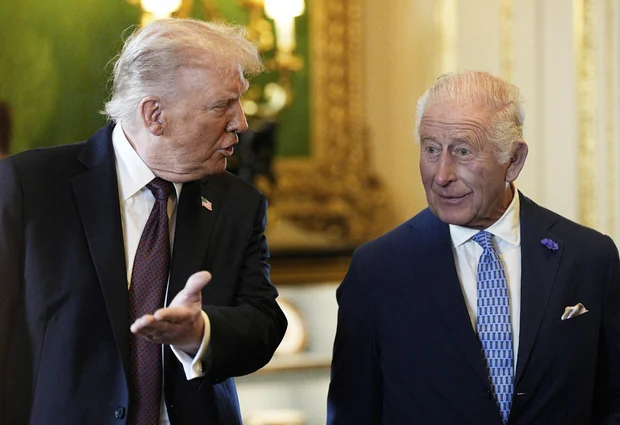
King Charles III and Queen Camilla are arriving in the United States for their first official visit as reigning monarchs—an event meant to celebrate the enduring ties between the U.K. and the U.S.
But behind the ceremonial pageantry lies a far more complex reality. Their meeting with Donald Trump comes at a moment of geopolitical tension, political disagreement, and growing uncertainty about the future of the so-called “special relationship.”
A Historic Visit Overshadowed by Global Tensions
The visit coincides with the 250th anniversary of the signing of the Declaration of Independence—a symbolic moment highlighting how two former adversaries became close allies.
However, the timing is far from ideal.
The king and Mr. Trump are seeking to strengthen and signify their countries’ ties at a time when the U.S. war with Iran and the president’s criticism of NATO threaten to undermine the “special relationship” that has defined transatlantic cooperation since World War II.
Adding to the tension, security concerns have intensified following an attempted shooting at the White House Correspondents’ Dinner. Despite this, Buckingham Palace confirmed the visit would proceed as planned.
Inside the Royal Agenda: Diplomacy, Ceremony, and Symbolism
The visit follows a traditional structure, blending diplomacy with royal protocol.
Key highlights include:
- A formal استقبال ceremony in Washington
- A bilateral meeting between King Charles and President Trump
- A joint address to Congress
- A state dinner at the White House
- A memorial visit in New York to honor victims of 9/11
- A stop in Virginia
The king will also participate in a private tea and a garden party with the president and first lady, emphasizing softer diplomatic engagement.
Experts believe the king’s address to Congress will be closely watched. Analysts expect a speech rooted in history—acknowledging America’s revolutionary origins while emphasizing shared democratic values.
A Delicate Balancing Act for King Charles
For King Charles, this visit is more than ceremonial—it is a test of diplomatic skill.
Unlike elected officials, the monarch must remain politically neutral while still representing national interests. That balance becomes increasingly difficult amid rising disagreements between Washington and London.
Keir Starmer has faced criticism from President Trump over:
- Refusal to fully support U.S. military actions against Iran
- Hesitation to engage in securing the Strait of Hormuz
- Immigration policies viewed unfavorably by the U.S. administration
Trump has even publicly mocked British military capabilities and questioned the value of NATO alliances, raising concerns about long-term cooperation.
Meanwhile, public opinion in the U.K. reflects unease. Polling suggests nearly half of Britons opposed the king making the trip at all, fearing it could be interpreted as political endorsement.
The “Special Relationship” Under Pressure
The U.S.-U.K. alliance—often referred to as the “special relationship”—has historically been built on shared values, intelligence cooperation, and military partnership.
But recent developments have strained that foundation:
- Diverging strategies on Iran
- Disagreements over NATO commitments
- Political friction between leadership on both sides
Experts warn that the relationship has “significantly deteriorated” compared to earlier periods when cooperation was more seamless.
Still, the monarchy provides a unique diplomatic channel. Unlike politicians, King Charles operates above party politics, offering a symbolic bridge even during turbulent times.
Trump and Charles: A Longstanding Relationship
Despite political tensions, the personal relationship between King Charles and Donald Trump appears cordial.
Trump has publicly described the king as:
“A fantastic man… a brave man.”
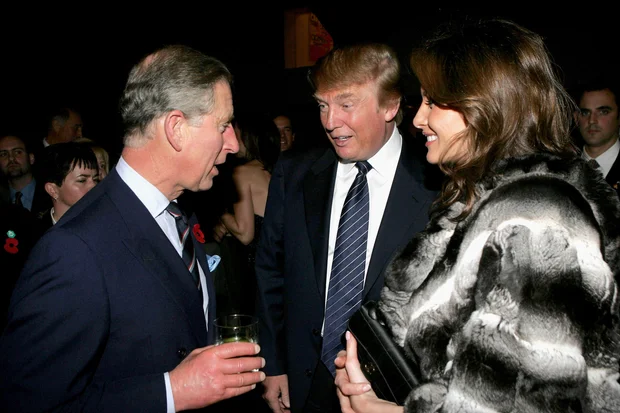
Their connection dates back over two decades, with early meetings in New York social circles. They later met officially during Trump’s presidency and again during a 2025 state visit to the U.K.
King Charles’ mother, Queen Elizabeth II, was known for her diplomatic finesse during Trump’s first term—a legacy many observers expect Charles to draw upon.