

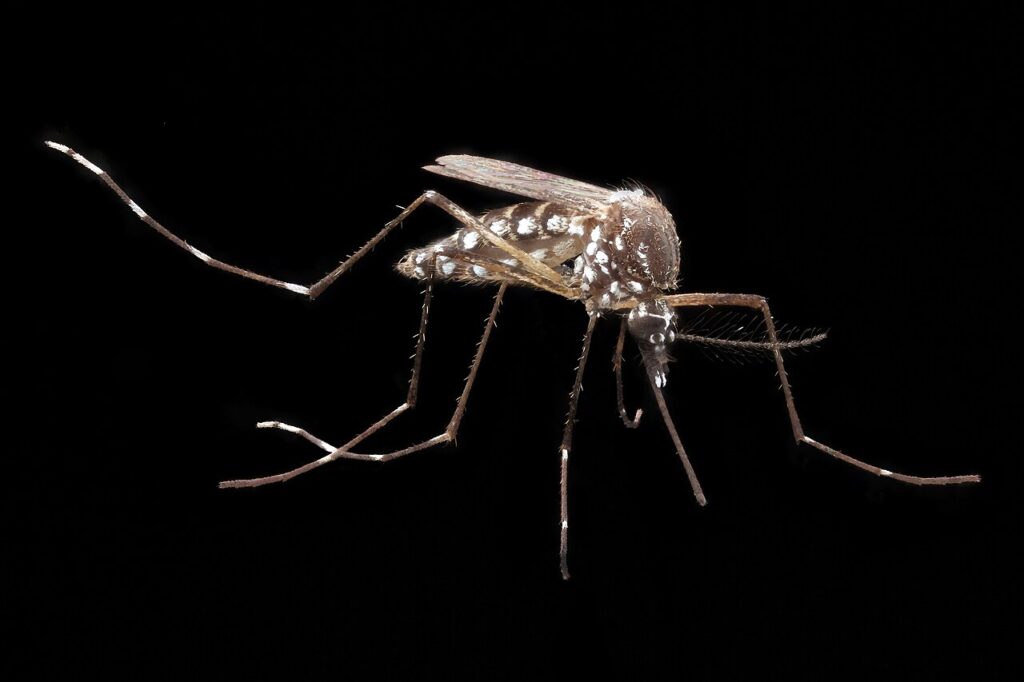
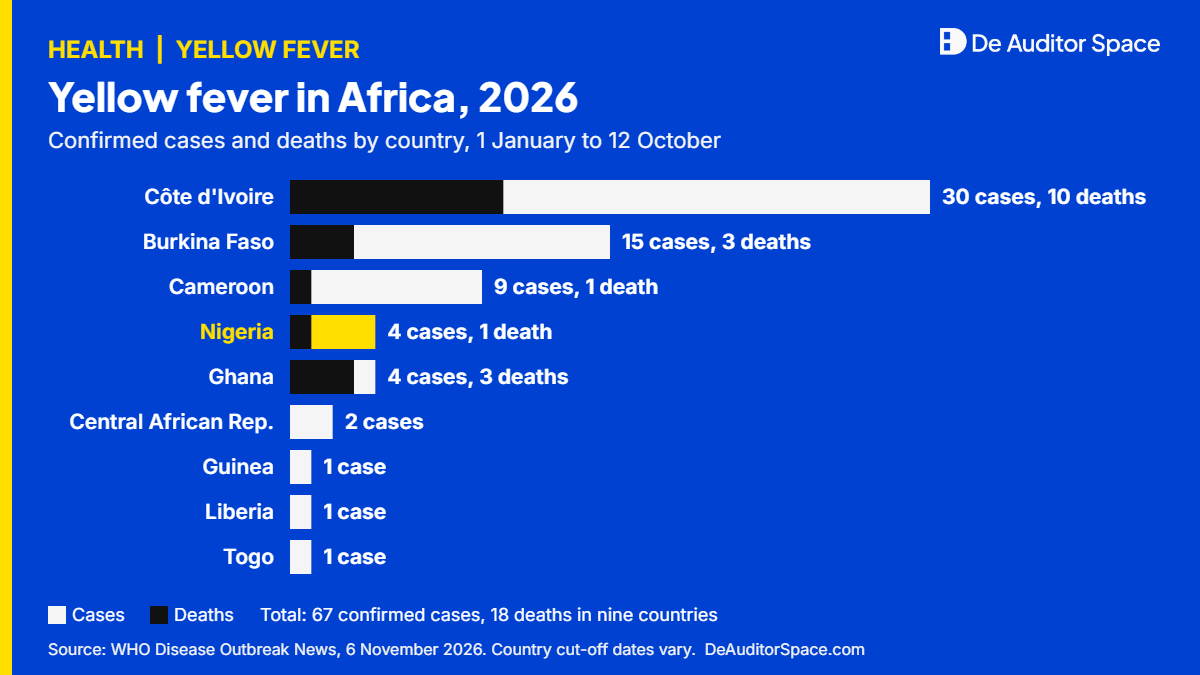
Nigeria has recorded four confirmed cases of yellow fever this year, one of them fatal, the World Health Organization (WHO) said on Friday. Nigeria is one of nine African countries where the mosquito-borne disease was confirmed between 1 January and 12 October 2026.
Across the nine countries, WHO counted 67 confirmed cases and 18 deaths. Its Disease Outbreak News report, published on 6 November, rates the risk in the WHO African Region as moderate. It puts the global risk as low.
Why it matters: Yellow fever has no specific cure, but a single jab protects for life, and WHO says unvaccinated people face the highest risk.
Key facts at a glance
- 67 confirmed yellow fever cases and 18 deaths in nine African countries, 1 January to 12 October 2026.
- Nigeria: four confirmed cases, including one death.
- Côte d’Ivoire is the worst hit, with 30 cases and 10 deaths.
- In June, WHO counted only 16 confirmed cases in Africa for January to May.
- WHO advises vaccination for travellers aged nine months and older going to at-risk areas.
How many yellow fever cases has Nigeria recorded?
WHO lists four confirmed cases in Nigeria, including one death. The report does not name the states where they occurred.
WHO also said each country’s figures use its own reporting cut-off date. That means Nigeria’s count may not run all the way to 12 October.
In its global yellow fever update of 24 June, WHO listed Nigeria among five African countries with suspected cases still under investigation. The others were Angola, Côte d’Ivoire, Gabon and Ghana.
Which African countries have yellow fever cases?
Côte d’Ivoire has the most. It reported 30 confirmed cases and 10 deaths as of 23 September. Bounkani Region alone accounted for 18 of those cases.
Burkina Faso had 15 cases and three deaths, and Cameroon had nine cases and one death. Ghana reported four cases, three of them fatal. The Central African Republic had two cases, while Guinea, Liberia and Togo had one each.
In all, 18 of the 67 confirmed patients died. That is about 27%, by De Auditor Space’s calculation.
Is yellow fever spreading in West Africa?
WHO said the latest activity is concentrated in Burkina Faso, Côte d’Ivoire, Ghana and Liberia, including areas close to international borders. It has not established links between the outbreaks in different countries.
The count has climbed quickly. WHO’s June update recorded 16 confirmed cases in Burkina Faso, the Central African Republic and Cameroon for January to May. By 12 October the total was 67, roughly four times higher, spread over nine countries.
WHO warned about towns where the Aedes aegypti mosquito lives and few people are immune. If the virus gets into such crowded areas, it said, this “could result in larger outbreaks”.
What is yellow fever and how does it spread?
Yellow fever is a viral disease passed on by the bite of infected mosquitoes. Signs usually appear three to six days after infection. Early symptoms include fever, headache, body aches, nausea and weakness, which can look like malaria.
About 15% of infected people become seriously ill, with jaundice (yellowing of the skin and eyes), bleeding and organ failure. “Approximately half of patients who enter this severe phase die within seven to 10 days,” WHO said. No antiviral drug is routinely recommended, so doctors treat the symptoms.
Who is most at risk?
Unvaccinated people are most exposed, according to WHO. It singled out rural and forest-edge communities, people who travel across borders, and those who work in forests, farming or mining.
Cross-border trips for trade, farming, livestock and mining could carry the virus from one country to another, the agency said. Its June report put average coverage of the routine yellow fever vaccine across the African Region at 65% in 2024. WHO wants coverage above 80% in at-risk populations.
Background: yellow fever in Africa
- 2024: Average routine yellow fever vaccine coverage in the WHO African Region stood at 65%.
- 2025: WHO recorded outbreaks in Angola and the Central African Republic.
- 24 June 2026: WHO counted 16 confirmed African cases for January to May, with suspected cases under investigation in five countries including Nigeria.
- 27 October 2026: WHO rated the regional risk as moderate.
- 6 November 2026: WHO reported 67 confirmed cases and 18 deaths in nine countries.
What it means for you
One dose of yellow fever vaccine gives lifelong protection, WHO says. In June it said 26 of 27 high-risk countries in Africa and the Eastern Mediterranean include the vaccine in routine childhood immunisation, so parents can check their child’s immunisation card for the dose.
Travellers aged nine months and older going to at-risk areas are advised to get vaccinated. Some countries ask for proof on the International Certificate of Vaccination or Prophylaxis, widely known as the yellow card. One documented dose is valid for life.
Anyone who develops a sudden fever and yellow eyes after time near forests, farms or mines should see a health worker quickly. Early symptoms are easy to confuse with malaria.
What happens next
WHO said continued transmission and more cases in the region are “considered likely”. Affected countries are stepping up surveillance, laboratory testing, case finding and vaccination in at-risk areas, with WHO support.
The agency does not advise any travel or trade restrictions on the affected countries.
Related coverage
- NARD strike threat: doctors reject bill to jail them over delays
- Lagos HIV survey: 4 in 10 people living with HIV don’t know it
Sources: WHO: Yellow fever, WHO African Region (DON624) · WHO: Yellow fever, Global (DON610) · Premium Times: Nigeria, eight other African countries record 67 yellow fever cases · NAN: Nigeria, 8 other African countries record 67 yellow fever cases


Join the conversation
Comments are moderated. Keep it respectful and on topic: no insults, hate, spam or personal details.