
Featured Image
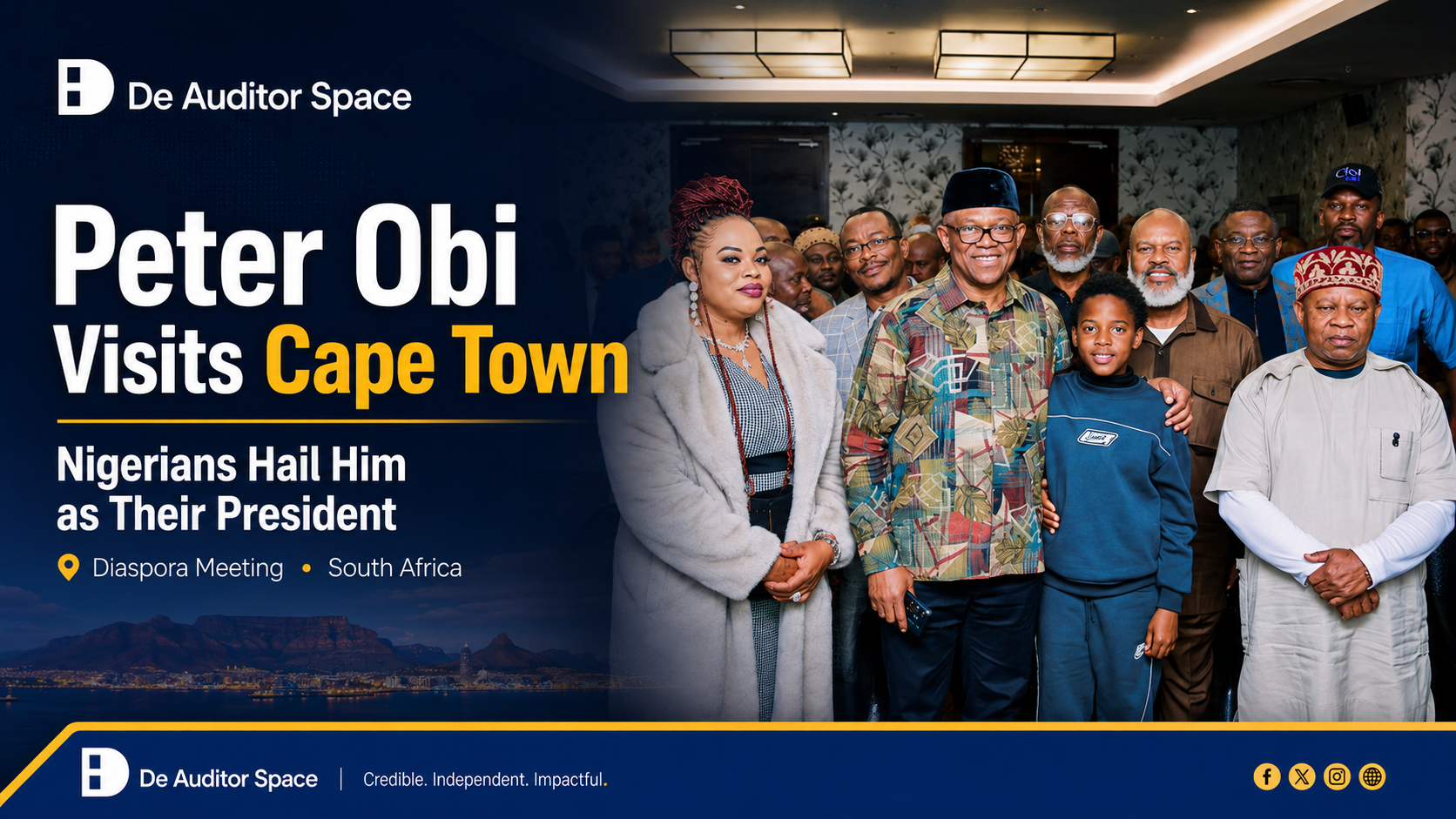
Peter Obi Cape Town visit has become more than a normal political trip.
To many Nigerians online, it looked like a man without official power still walking into a painful diaspora issue with calmness, attention, and purpose.
And that is why the praise came loud.
What Happened in Cape Town
Former Anambra State Governor and opposition figure, Peter Obi, arrived in Cape Town, South Africa, on Friday, May 22, 2026, for the Spier Dialogue 2026, a high-level African forum focused on governance, democracy, economic inclusion, migration, urbanisation, leadership, and youth empowerment. TheFact reported that Obi arrived on Friday for the event, while other reports also linked his visit to the continental policy dialogue.
Although public reports confirmed the date, no credible source reviewed gave the exact clock time of his arrival. So, De Auditor Space will not invent a time.
However, what happened after his arrival carried the real weight.
Obi Meets Nigerians in Cape Town
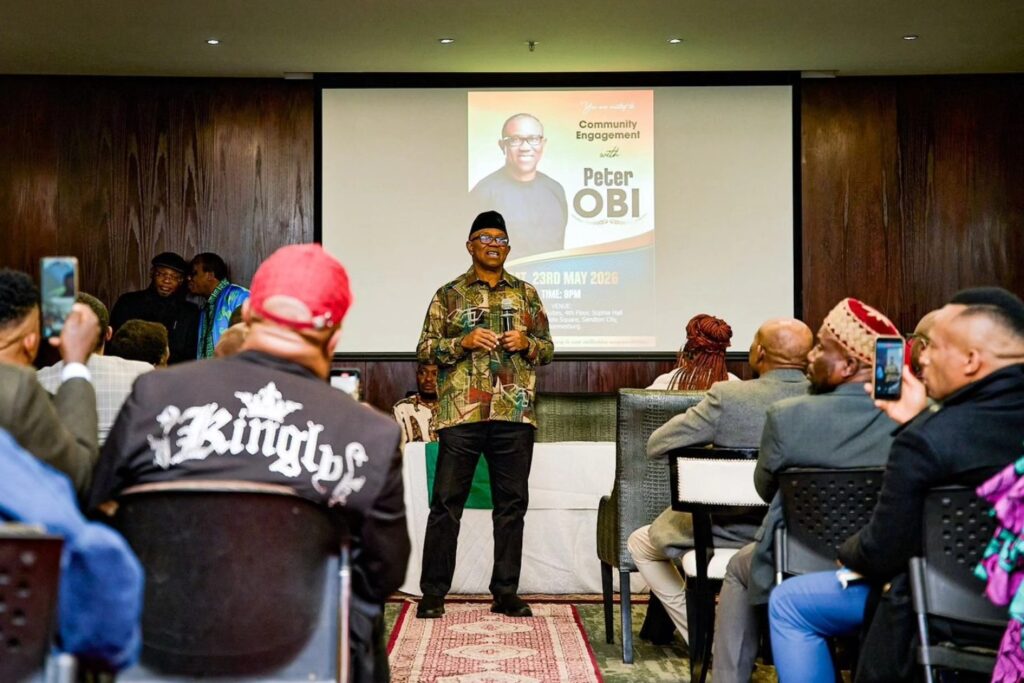
After arriving in Cape Town, Obi met with members of the Nigerian community in South Africa. Reports say the meeting lasted for about two hours and focused on the challenges facing Nigerians and other African expatriates in South Africa.
The issues reportedly discussed included:
- Immigration pressure
- Xenophobic tension
- Safety of Nigerians in South Africa
- Regional cooperation
- Peaceful coexistence
- The dignity of Africans living outside their home countries
This was not a small meeting for photo alone. At least from the reported details, Obi listened first before moving to meet South African political leaders. That matters.
The People Obi Met in South Africa
The next key move came after the community meeting.
Obi said he held discussions with three senior South African political figures. Reports named them as:
Leon Schreiber — South Africa’s Minister of Home Affairs and a member of the Democratic Alliance.
Velenkosini Hlabisa — Minister of Cooperative Governance and Traditional Affairs and leader of the Inkatha Freedom Party.
Gayton McKenzie — Minister of Sports, Arts and Culture and leader of the Patriotic Alliance.
The Nation, Arise News, and Credibility News all reported these names and said the talks centred on immigration, regional collaboration, migration tension, unemployment, security concerns, and peaceful coexistence.
What Obi Said About Africa’s Future
At the Spier Dialogue, Obi also spoke about Africa’s wider problem.
He warned that Africa should not remain poor in the middle of abundance. He also called for a shift from consumption to production, from divisive politics to competence and compassion, and from empty promises to real progress for ordinary people.
That message fits the same theme he has pushed for years: production, education, responsible leadership, and people-centred governance.
However, this Cape Town trip touched something deeper. It touched the dignity of Nigerians abroad.
Available Transcript / Verified Public Excerpts
A full official transcript of the closed community meeting has not been publicly released from the sources reviewed. Therefore, De Auditor Space cannot honestly claim to have the full word-for-word transcript of everything said inside the meeting.
But public reports and video captions gave some clear excerpts and summaries.
Excerpt 1: Obi on Africa’s future
“Africa’s future should not be characterised by poverty amid abundance or by division instead of development.”
This quote was reported from Obi’s statement around the Spier Dialogue visit.
Excerpt 2: Obi on production and leadership
“It is time for us to transition from consumption to production…”
Reports said Obi used this message to call for competence, compassion, and progress that serves everyday citizens.
Excerpt 3: Obi on Nigeria–South Africa cooperation
“Nigeria and South Africa… must enhance dialogue, strengthen cooperation…”
Credibility News reported that Obi stressed justice, mutual respect, and rule of law as the basis for solving issues between both countries.
Excerpt 4: Obi on meeting South African leaders
Obi said he had meaningful discussions with South African ministers and political leaders after speaking with Nigerians in Cape Town. Search results from his verified X post also show that he described the talks as discussions on immigration, regional collaboration, and peaceful coexistence.
Excerpt 5: Public chant from supporters
A video clip circulating on Instagram showed Nigerians welcoming Obi in Cape Town, with the visible transcript capturing chants of “Obi! Obi! Obi!”
That chant is not an official election result. But it shows emotion, loyalty, and deep public connection.
Nigerians React: “Our Incoming President”
The visit triggered strong reactions online.
On Nairaland, many Nigerians praised Obi and described him in presidential terms. One commenter wrote that he was already taking action and carrying himself “presidentially.” Another said, “Good one Mr Obi, Nigerians know their President.” Others called him “Mr president,” “the true man of the people,” and “our incoming president.”
However, not everyone praised him.
Some critics argued that the meetings could be mere optics. Others questioned what authority Obi had to influence South African immigration policy since he does not currently hold federal executive office.
So, the public reaction was mixed. Still, the praise was loud, emotional, and politically significant.
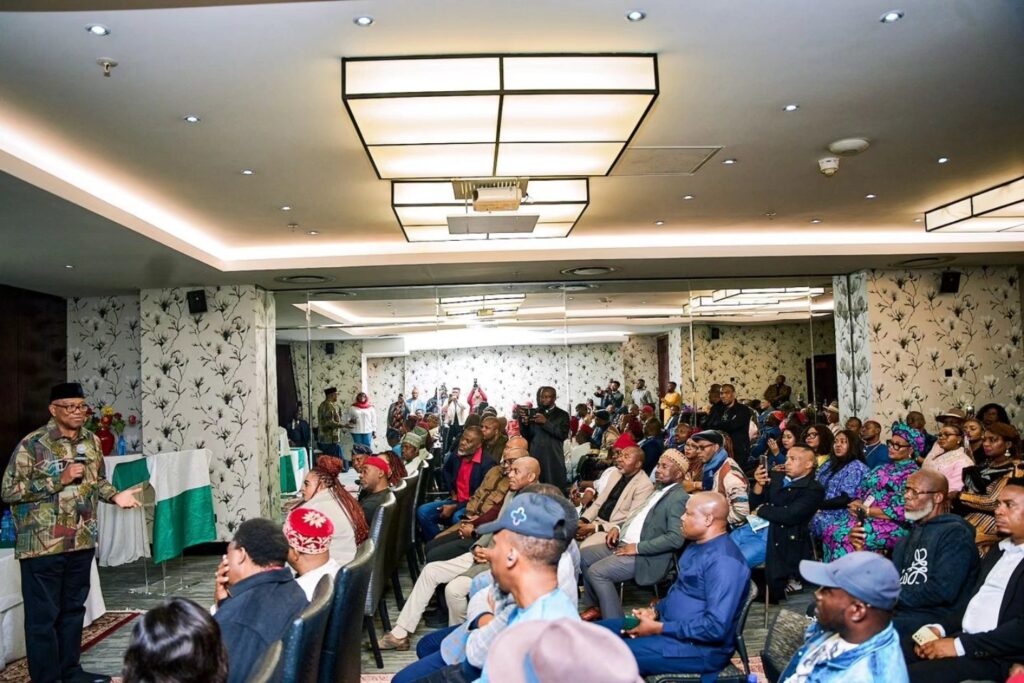
Why This Move Hit Nigerians Differently
This visit touched Nigerians because it came at a time when many citizens feel abandoned.
Nigerians abroad often face immigration stress, documentation pressure, xenophobic threats, and public hostility. Yet, many believe their government does not respond with the urgency they expect.
So, when Obi entered the conversation, met Nigerians first, and then met South African leaders, many people saw it as leadership without an official title.
That is why the praise became emotional.
To his supporters, the move looked presidential.
To his critics, it looked political.
But to Nigerians affected by the issue, the important question is simple: will this bring results?
The Raw Facts / What We Know
Here are the confirmed points from available reports:
- Peter Obi travelled to Cape Town for the Spier Dialogue 2026.
- The event focused on African governance, democracy, migration, youth empowerment, and economic inclusion.
- He arrived in Cape Town on Friday, May 22, 2026, according to TheFact.
- He met the Nigerian community in Cape Town after arrival.
- Reports say the meeting lasted about two hours.
- He later met Leon Schreiber, Velenkosini Hlabisa, and Gayton McKenzie.
- The talks focused on immigration, migration tension, security, unemployment, and peaceful coexistence.
- Many Nigerians online praised him and called him presidential.
- A full official transcript of the closed meeting has not been publicly released.
What This Means for Nigerians
This Cape Town visit sends one clear message: Nigerians want leaders who show up.
They want leaders who listen.
They want leaders who engage.
They want leaders who carry national dignity with seriousness.
Also, they want leaders who treat citizens abroad as human beings, not just remittance machines.
That is why Obi’s movement received attention.
At the same time, Nigerians must understand one thing. Meetings alone do not solve problems. They can open doors, calm tension, and build pressure. But real solutions need formal diplomacy, embassy support, immigration reform, legal protection, and clear agreements between countries.
Way Forward
First, the Nigerian government must treat attacks, threats, and hardship facing Nigerians abroad as a serious national issue.
Second, Nigeria’s embassy and consular offices in South Africa must improve communication with citizens. People need emergency contacts, legal guidance, and timely updates.
Third, South African authorities must act fairly. They must protect lawful migrants while dealing with crime through the law, not through mob action or xenophobic punishment.
Fourth, Nigerian community leaders in South Africa must encourage lawful living, proper documentation, business discipline, and peaceful engagement.
Finally, public figures like Obi should keep using influence to push dialogue. But official institutions must also do their job.
De Auditor’s Bitter Truth
De Auditor has spoken.
The bitter truth is this: Nigerians are praising Peter Obi in Cape Town because many people feel leadership at home has become too distant from ordinary pain.
When citizens abroad are afraid, they need more than silence.
When Nigerians are attacked, they need more than grammar.
When immigration pressure rises, they need leaders who can enter rooms, ask questions, and demand respect without making noise.
That is why this Cape Town move touched people.
But let us also be honest. Peter Obi is not the Nigerian President today. Therefore, the Nigerian government still carries the constitutional duty to protect Nigerians, whether they live in Lagos, Benin, Abuja, Cape Town, Johannesburg, or anywhere in the world.
Praise is good. Hope is powerful. But institutions must work.
If one man outside power can create this kind of emotional response by simply showing concern, then those inside power should ask themselves a painful question:
Why do Nigerians feel more seen by someone without the office than by many people holding the office?
That is the truth many people will not like. But truth must be delivered.
De Auditors, Over to You
De Auditors, what do you think?
Did Peter Obi’s Cape Town visit show true leadership, or was it just politics and optics?
Drop your honest opinion in the comment section. Let us talk with facts, not insults.
Ideas Audited. Truth Delivered.