
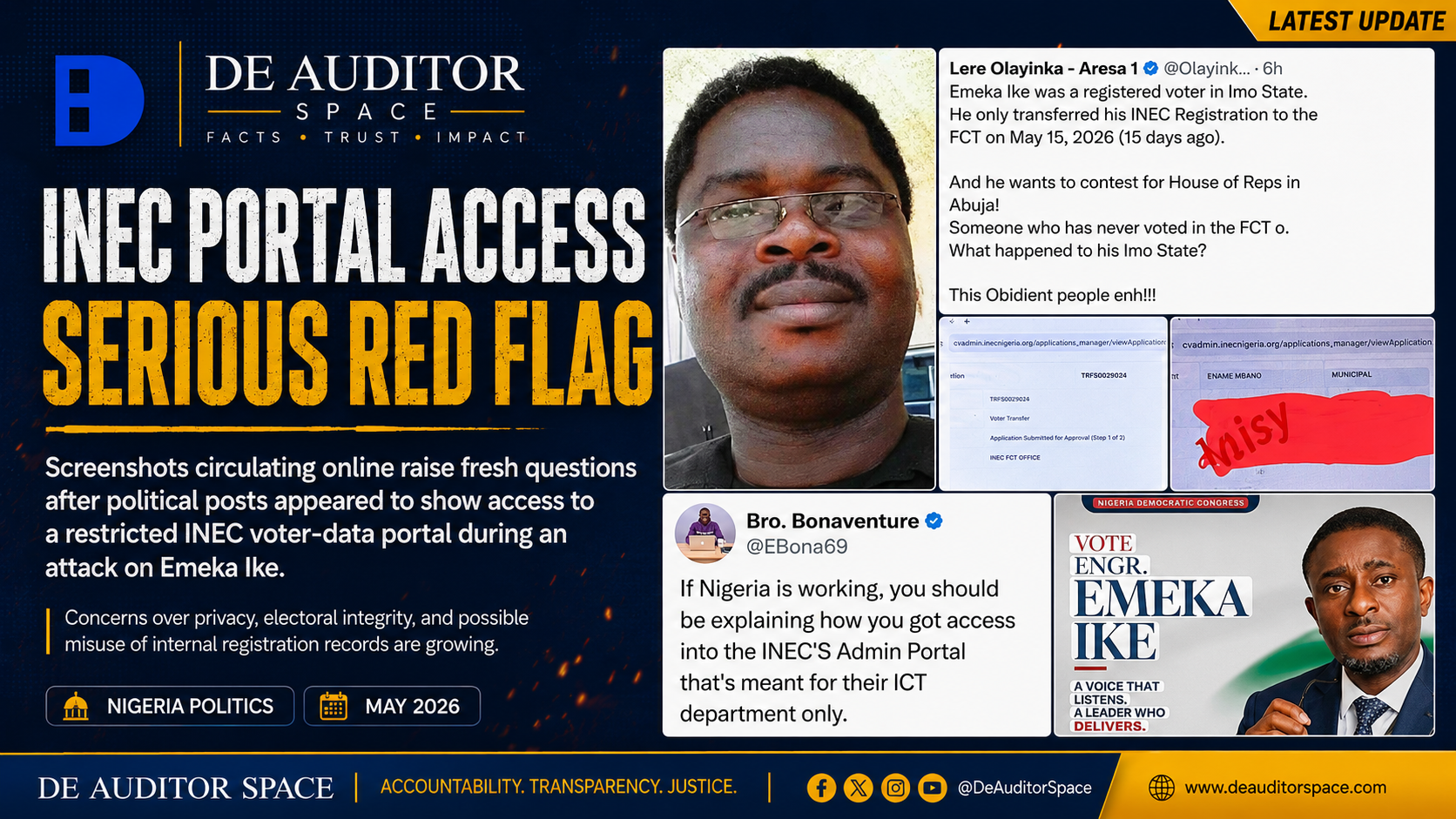
INEC admin portal controversy over alleged voter transfer screenshots and data access concerns
The INEC admin portal controversy has sparked fresh public concern after several screenshots circulated online, allegedly showing internal voter transfer details linked to the Independent National Electoral Commission’s system.
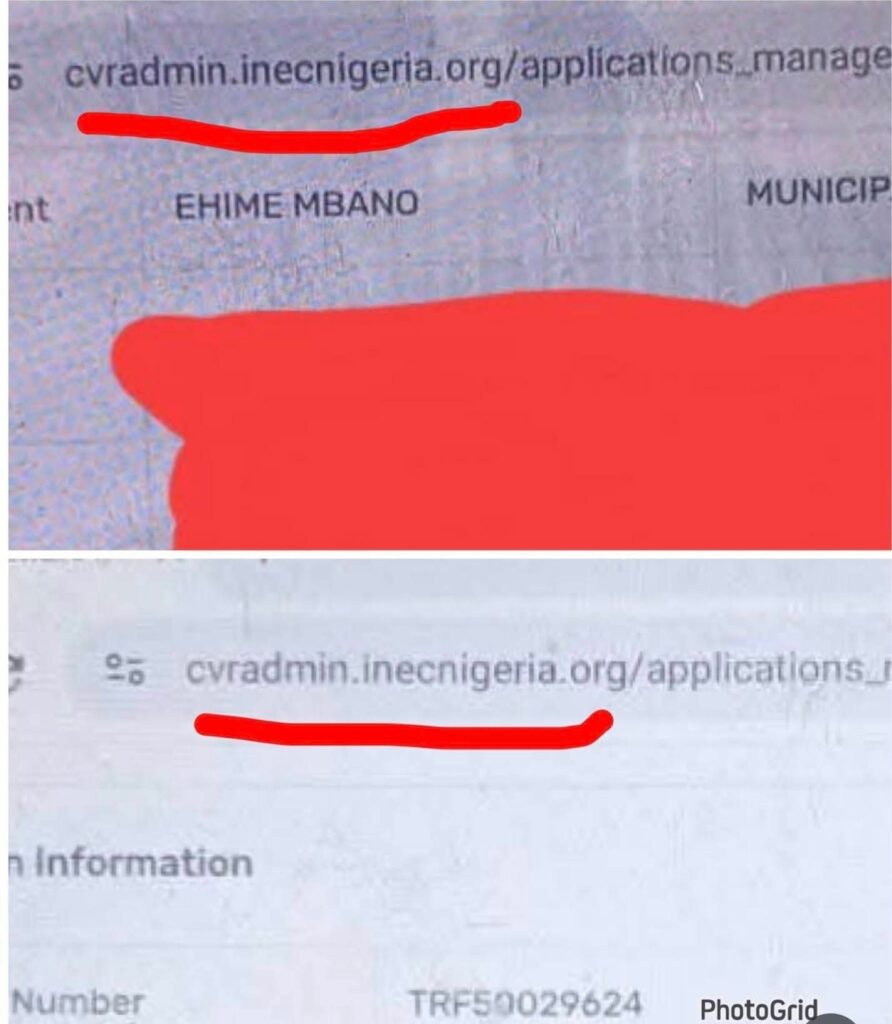
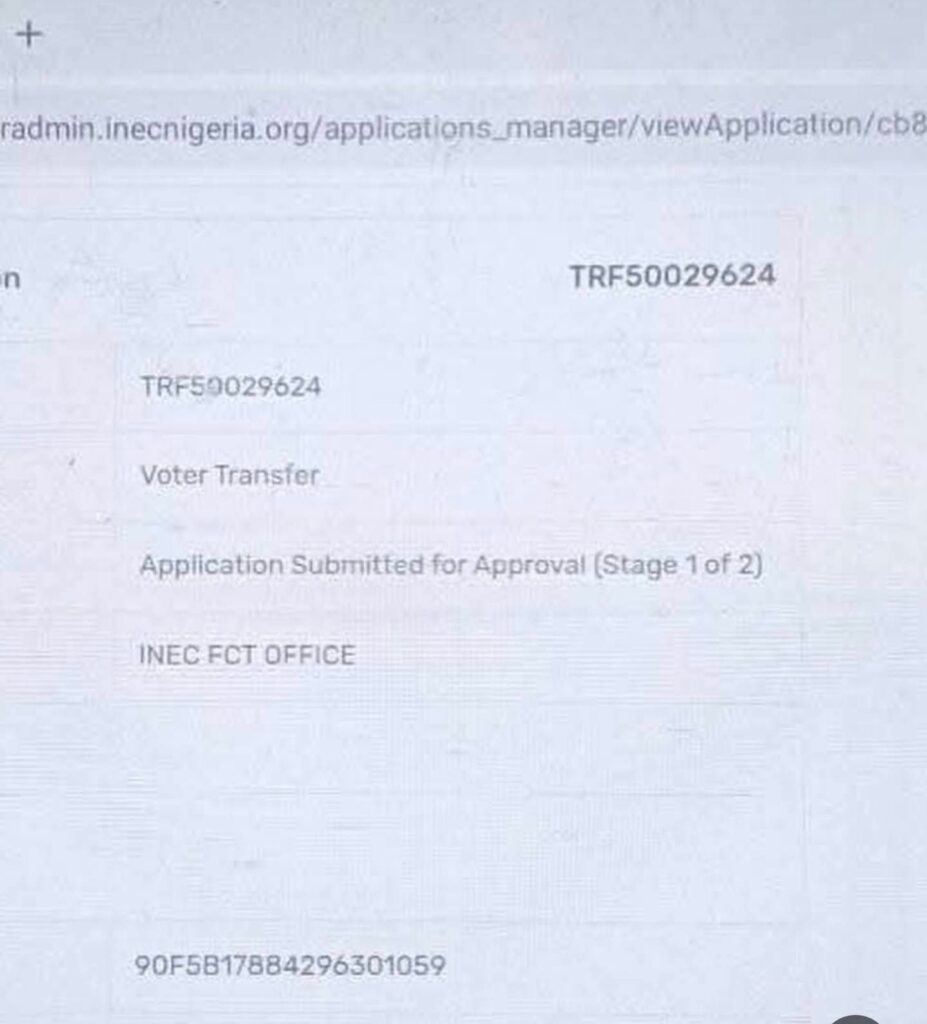
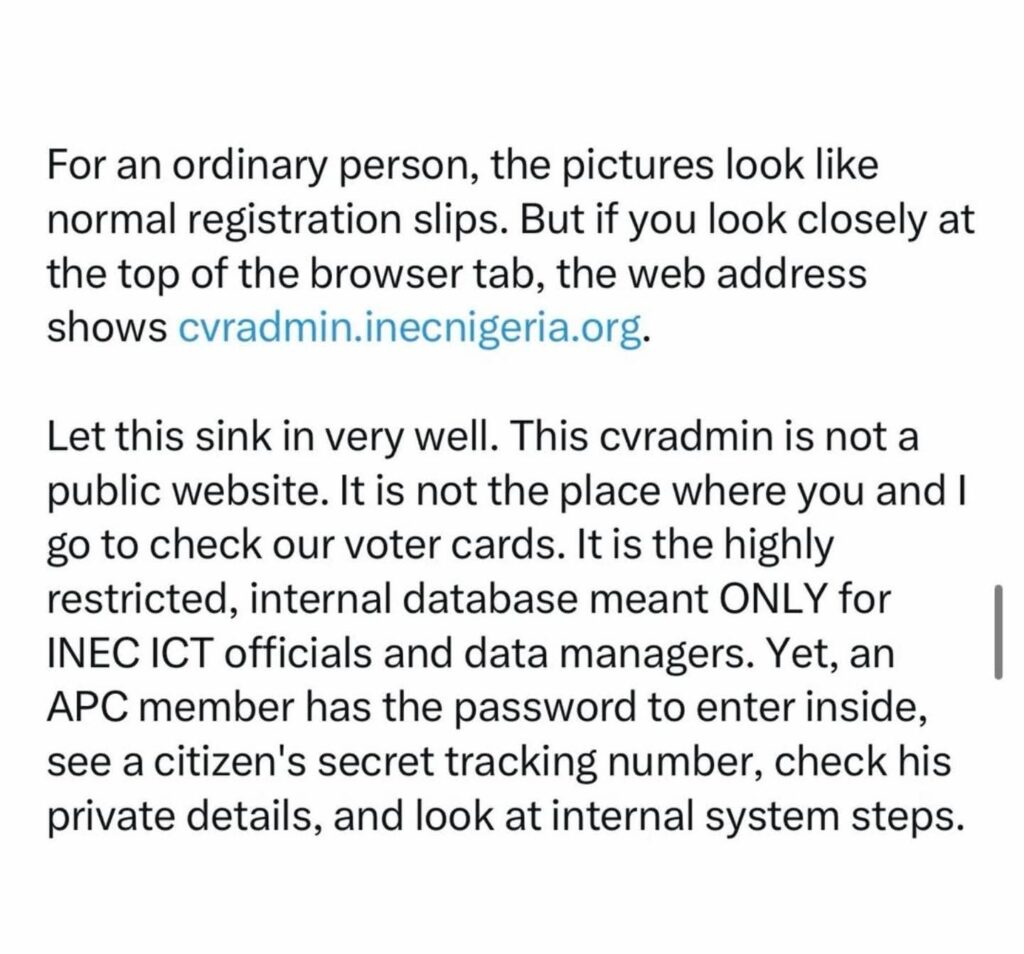
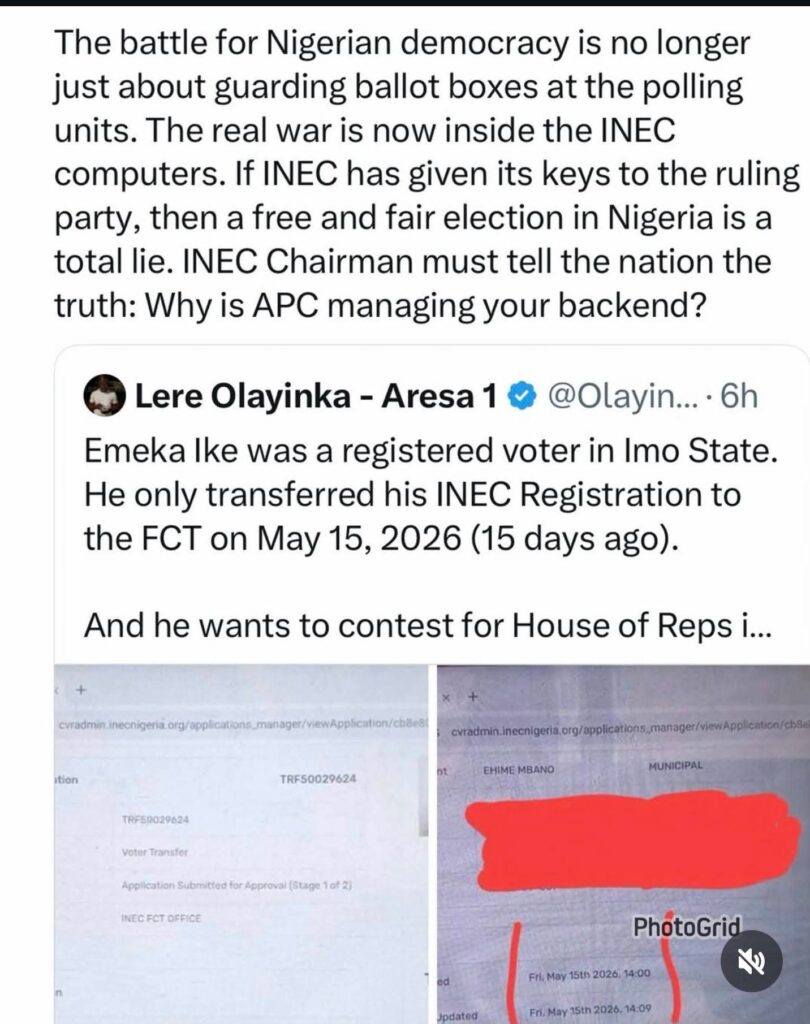
The screenshots, which have drawn strong reactions on X and Facebook, appear to show a voter transfer application page, internal tracking details, and a web address that some social media users described as an administrative section of INEC’s voter registration platform.
At the centre of the controversy is a public exchange involving actor and political aspirant Emeka Ike. Some online users claimed that screenshots shared to question his voter transfer may have exposed access to information that should normally remain within INEC’s internal systems.
De Auditor Space has reviewed the attached screenshots. However, as of publication, the screenshots have not been independently authenticated through official digital forensics. INEC has also not been shown in the provided material making a formal public response to the specific screenshots.
What The Screenshots Appear To Show
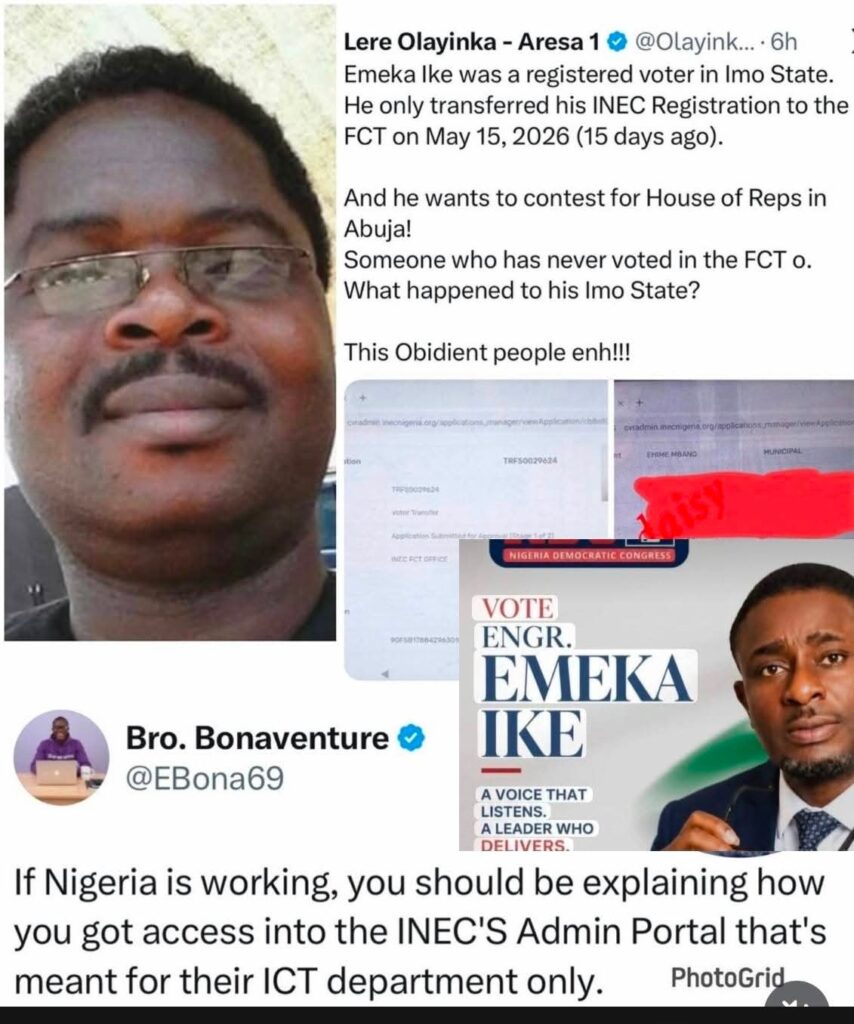
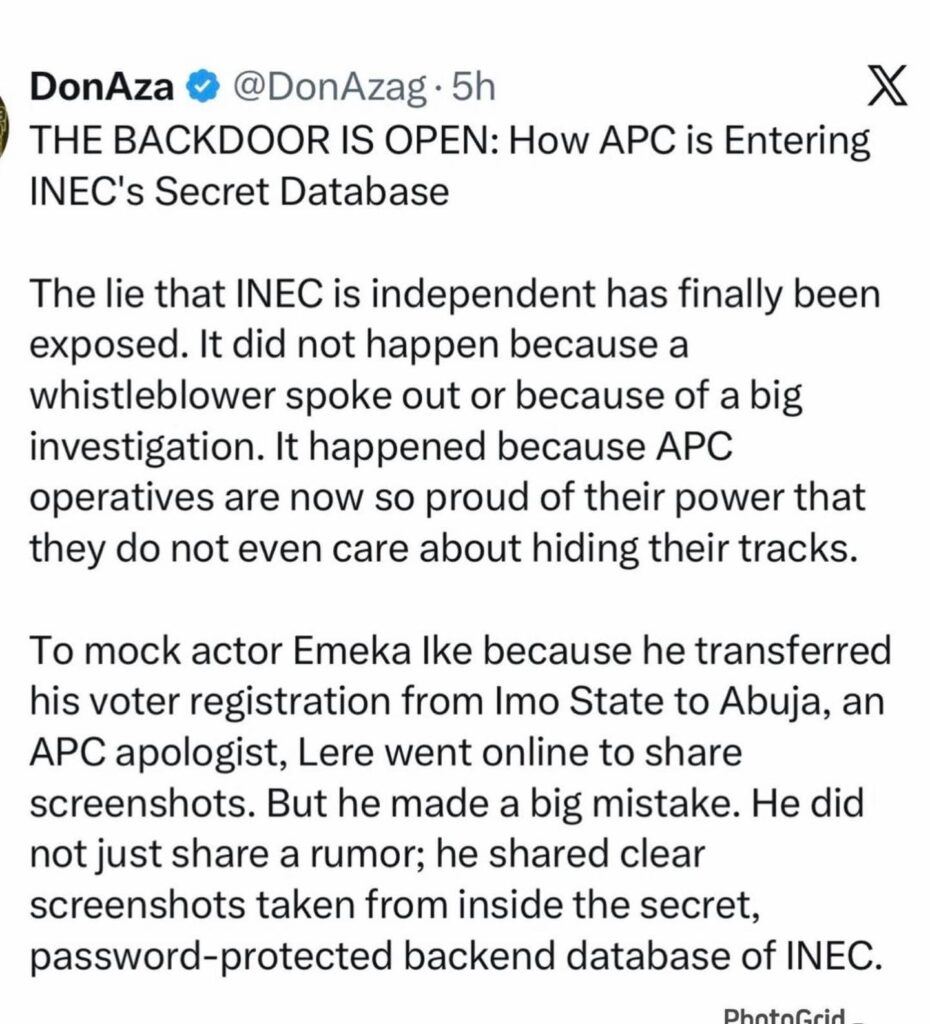
The attached images show posts from different social media users raising alarm over what they describe as possible access to INEC’s backend or administrative portal.
One screenshot claims that “top level access” should only be reserved for key INEC personnel. It further describes the alleged exposure as a “serious red flag” that should not be ignored by opposition parties, civil society organisations, and Nigerians interested in credible elections.
Another post claims that the images show administrative access to the INEC registration portal. It also argues that such access could raise confidentiality and data protection questions.
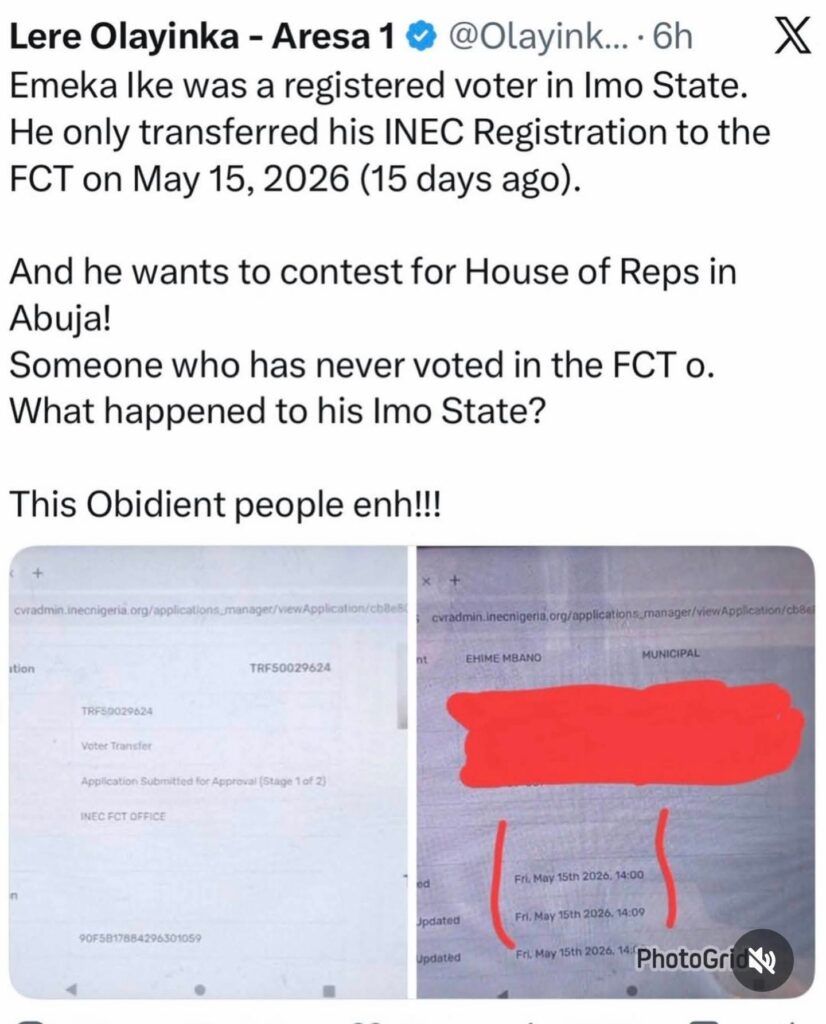
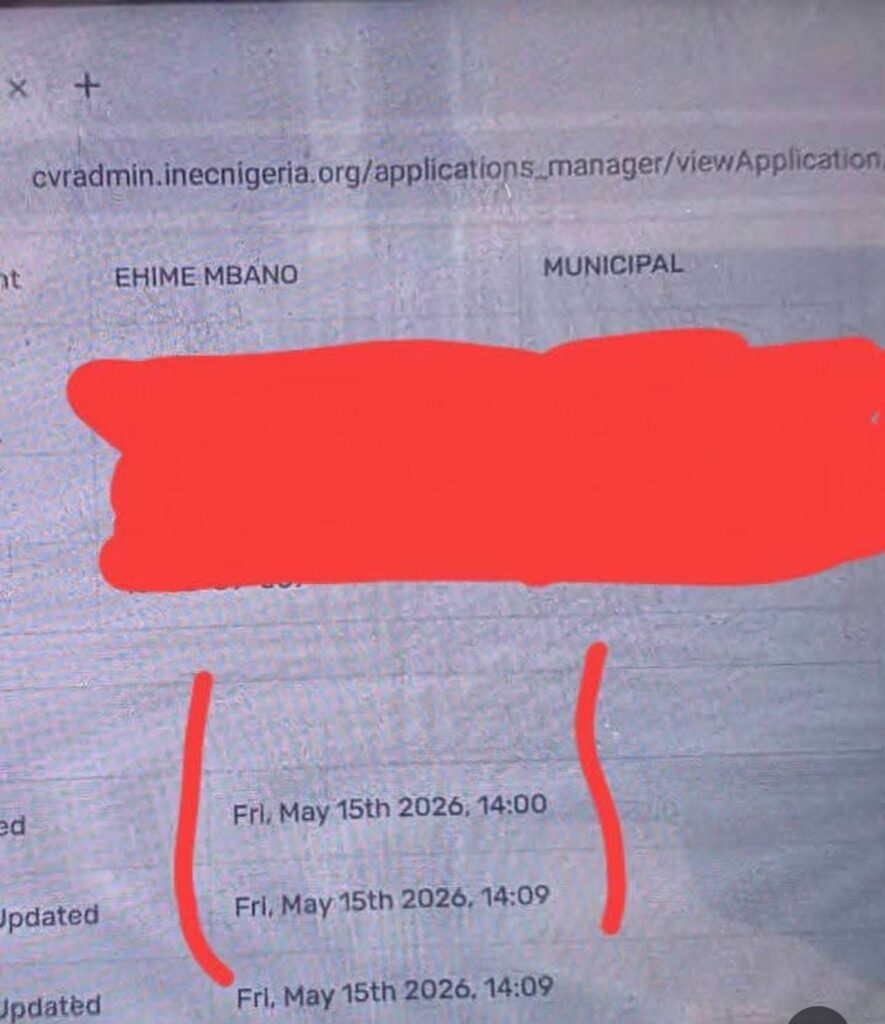
Other screenshots show what appears to be a voter transfer record. The visible details include terms such as “Voter Transfer,” “Application Submitted for Approval,” “INEC FCT Office,” and timestamps dated May 15, 2026.
Some parts of the voter information in the screenshots were covered with red markings, suggesting that private details were intentionally hidden before circulation.
Emeka Ike Voter Transfer Claim Draws Political Reactions
The controversy appears to have started after a post claimed that Emeka Ike was registered in Imo State and had transferred his INEC registration to the FCT on May 15, 2026.
The post questioned his reported plan to contest for a House of Representatives seat in Abuja. However, the reaction quickly shifted away from Emeka Ike and moved toward a bigger issue: how the screenshots were obtained.
Several users argued that, even if the voter transfer claim was politically motivated, the bigger question is whether anyone outside authorised INEC ICT staff had access to internal voter data.
This is why the INEC admin portal controversy is now bigger than one political aspirant. It now touches on voter privacy, electoral confidence, and the security of Nigeria’s election technology.
Why This Allegation Matters
The issue is serious because election data is sensitive. Voter registration, transfer applications, tracking numbers, personal records, and internal processing stages are not ordinary political gossip.
If the screenshots came from an authorised INEC official, then INEC must explain why internal voter records were used in a political argument.
If they came from an unauthorised person, then the matter becomes a possible data security breach.
Either way, Nigerians deserve a clear answer.
INEC is currently chaired by Professor Joash Ojo Amupitan, SAN, according to INEC’s own published material from November 2025.
Data Privacy Questions For INEC And NDPC
Nigeria now has a data protection framework under the Nigeria Data Protection Act. That law places responsibility on organisations that collect and process personal data to protect such information and handle it lawfully.
This means voter information should not be accessed, shared, displayed, or used casually. If any personal voter data was exposed without lawful authority, then the Nigeria Data Protection Commission should treat the matter as serious.
The NDPC should not wait for public anger to fade. It should request answers from INEC, review the screenshots, identify the source of access, and determine whether any privacy rule was broken.
What INEC Must Clarify
INEC needs to answer key questions clearly.
Did the screenshots come from an official INEC internal system?
Who had access to the voter transfer record shown online?
Was the information accessed by an authorised staff member?
Was any login credential shared with a person outside INEC?
Was any voter’s personal data exposed?
Has INEC started an internal audit on the matter?
These questions are not political attacks. They are basic accountability questions.
Opposition Parties And Civil Society Must Pay Attention
The 2027 election is already becoming a major national concern. Therefore, opposition parties, civil society groups, election observers, journalists, lawyers, and digital rights advocates must pay attention to this issue.
Election credibility is no longer only about ballot boxes. It is also about databases, portals, login access, server security, voter records, and digital audit trails.
If Nigerians cannot trust the safety of voter data, then confidence in the electoral process will suffer.
De Auditor Space Editorial Position
The INEC admin portal controversy should not be dismissed as normal social media noise.
At the same time, the public must avoid turning unverified screenshots into final judgment. The right step is a transparent investigation.
INEC must speak. NDPC must review the data privacy angle. Political actors must stop using sensitive voter information as a weapon. And Nigerians must demand a system where no party, politician, aide, or private actor can access confidential election records for political attacks.
This is the bitter truth: Nigeria cannot build credible elections on a weak digital foundation. If the backend of an election system becomes part of political banter, then the country has a bigger problem than campaign insults.
The way forward is simple. INEC should order an immediate access audit, publish a clear public explanation, sanction any staff or outsider involved in wrongful access, and strengthen protection around voter data before 2027.
Engagement Question:
Do you think INEC should invite independent cyber-security experts to audit its voter registration system before the 2027 elections?
Hashtags:
#INEC #INECAdminPortal #NigeriaElections #ElectionSecurity #DataPrivacy #NDPC #NigeriaDataProtectionAct #2027Elections #VoterData #CyberSecurity #ElectoralIntegrity #DeAuditorSpace
Editorial Ending:
Ideas Audited. Truth Delivered.