

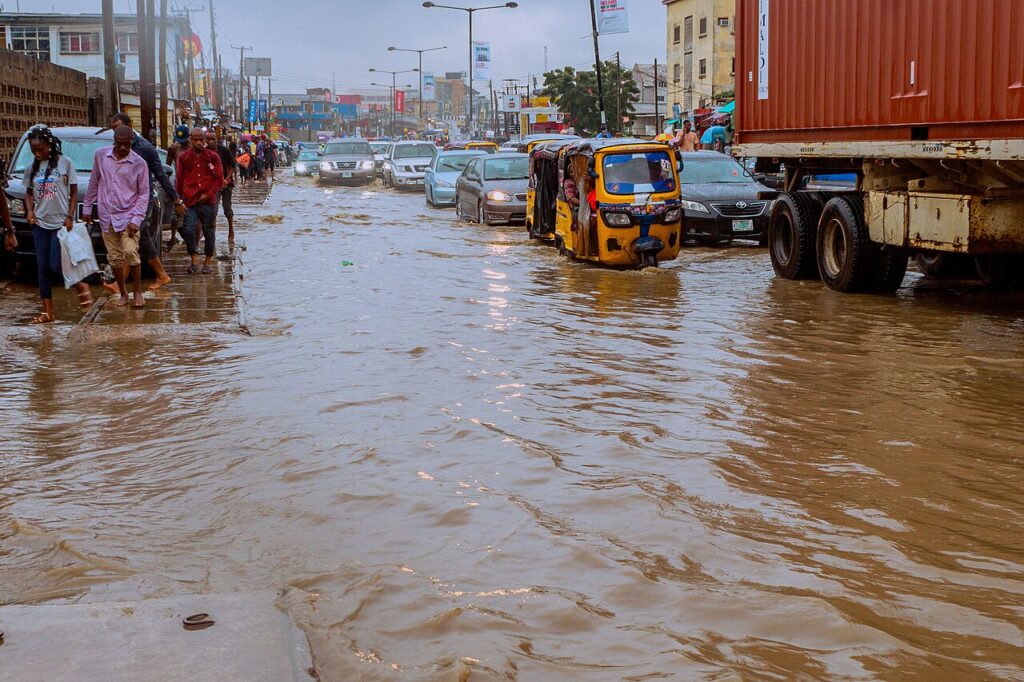
The COP31 United Nations climate summit opens on Monday, 9 November, in Antalya, Türkiye, and Nigeria is going with one main demand: money to pay for adapting to floods, heat and the shift away from oil and gas. Nigeria will negotiate as part of the African Group of Negotiators (AGN), the bloc that speaks for all 54 African countries at the talks.
The summit runs until 20 November, according to the UN climate change secretariat (UNFCCC). Türkiye is the host, while Australia leads the formal negotiations under a partnership agreed between the two countries.
Why it matters: the deals struck at COP31 will shape how much grant and low-interest funding reaches countries like Nigeria for flood defences, clean power and new jobs over the next decade.
Key facts at a glance
- COP31 holds in Antalya from 9 to 20 November 2026.
- The AGN wants an agenda item on tripling adaptation finance and an “ambitious” new round of funding for the Green Climate Fund (GCF), a UN-backed fund for climate projects.
- Nigeria’s delegation work is being coordinated by the National Council on Climate Change (NCCC), led by Director-General Tenioye Majekodunmi.
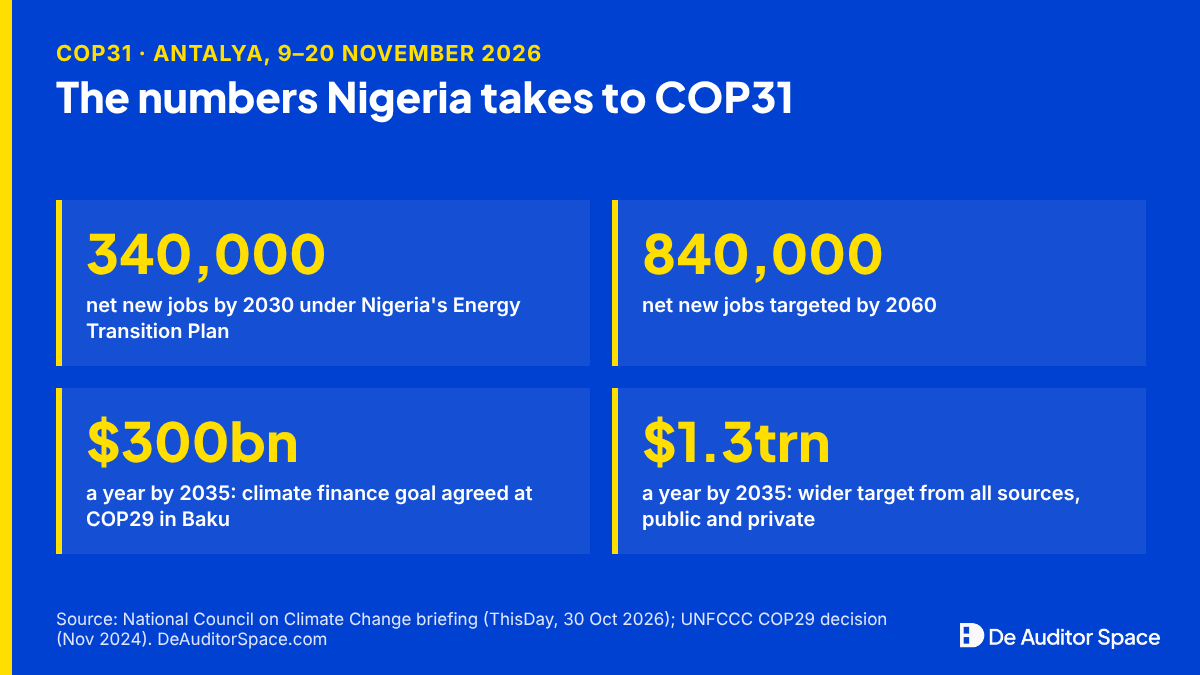
- Nigeria says its Energy Transition Plan can create about 340,000 net new jobs by 2030 and 840,000 by 2060.
- At COP29 in 2024, countries agreed a goal of at least $300 billion a year in climate finance for developing countries by 2035.
What will Nigeria and Africa push for at COP31?
The AGN chair, Nana Antwi-Boasiako, told Premium Times that Africa has built much of the machinery the Paris Agreement requires, including national climate plans, carbon market rules and adaptation plans. The missing piece, he said, is funding. “The key question now is: Where is the money?” he said.
He said the group had proposed agenda items on tripling adaptation finance, following a decision taken at COP30 in Belém, Brazil, and on refilling the Green Climate Fund. He also said the move away from fossil fuels “must happen in a more equitable manner” for Africa.
That point matters for Nigeria, an oil and gas producer, and for Niger Delta communities such as Bille in Rivers State, where groups have called for an emergency over a gas seepage, as De Auditor Space reported on Saturday.
What is Nigeria’s COP31 plan?
At a pre-COP31 briefing in Abuja, NCCC Director-General Tenioye Majekodunmi set the theme as “Nigeria at COP31: From Commitment to Implementation”, Voice of Nigeria reported. She told investors that “Capital follows certainty” and summed up Nigeria’s goals as four Ds: “Dollars, Deals, Deliveries and Dividends.”
According to ThisDay, she said Nigeria’s Energy Transition Plan could produce about 340,000 net new jobs by 2030, rising to 840,000 by 2060, in power, clean cooking and transport. Nigeria also has an updated national climate plan, called NDC 3.0 (its third Nationally Determined Contribution under the Paris Agreement).
Nigerian negotiators held a capacity-building workshop on 20 October covering carbon markets under Article 6 of the Paris Agreement and the new climate finance goal, ThisDay reported.
How much climate finance has been promised?
At COP29 in Baku, Azerbaijan, on 24 November 2024, countries agreed a New Collective Quantified Goal (NCQG) on climate finance. It calls on developed countries to lead in raising at least $300 billion a year for developing countries by 2035, within a wider goal of $1.3 trillion a year from all sources, according to UN Trade and Development (UNCTAD).
The $300 billion figure is three times the old $100 billion yearly goal set in 2009. UNCTAD had estimated that real needs were closer to $900 billion a year from 2025, rising to $1.46 trillion by 2030. The AGN says it wants more of the money to come as grants and concessional (low-interest) funding, Premium Times reported.
Background: the road to Antalya
- 24 November 2024: COP29 in Baku agrees the $300 billion-a-year finance goal.
- November 2025: COP30 in Belém, Brazil, decides to triple adaptation finance; Türkiye and Australia agree to share the COP31 presidency.
- 5 to 8 October 2026: Pre-COP31 ministerial meeting in Fiji, with a leaders’ gathering in Tuvalu.
- 20 October 2026: Nigerian negotiators hold a pre-COP31 workshop in Abuja.
- 9 November 2026: COP31 opens in Antalya.
What it means for you
Climate finance decides whether projects such as flood barriers, drainage, solar mini-grids and clean cooking schemes get built, and on what terms. More grants and cheaper loans would reduce how much Nigeria borrows for these projects. The jobs Nigeria is promising depend on investors actually putting money into its energy plan.
What happens next
Talks open on 9 November. A leaders’ summit is scheduled for 11 and 12 November, the third and fourth days of the conference, before negotiators try to agree final texts by 20 November.
Related coverage
- Bille gas seepage: Groups urge Tinubu to declare emergency
- Kebbi flood risk is high for 2026 rainy season, NEMA warns
- UN adviser says Iran crisis shows risk of relying on fossil fuels
Sources: UNFCCC: The Road to Antalya · Premium Times: What Nigeria, other African countries will push for at COP31 · Voice of Nigeria: Nigeria intensifies climate finance drive ahead of COP31 · ThisDay: Nigeria targets 840,000 jobs from climate transition · UNCTAD: Countries agree $300 billion by 2035 · Wikipedia: 2026 UN Climate Change Conference


Join the conversation
Comments are moderated. Keep it respectful and on topic: no insults, hate, spam or personal details.