

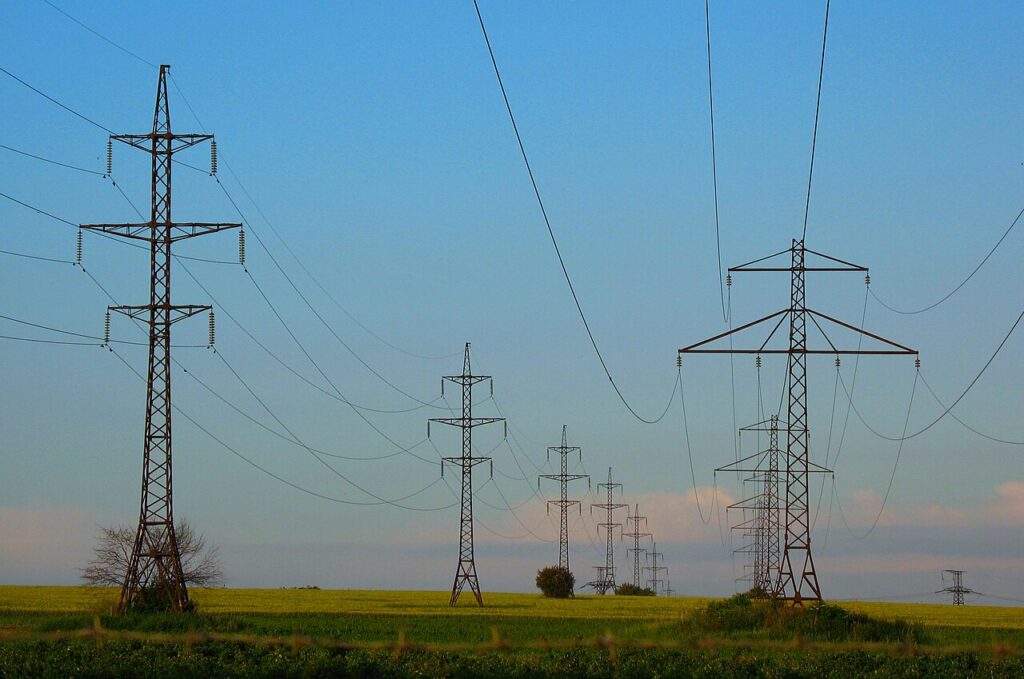
The Transmission Company of Nigeria (TCN) has rejected the claim that “grid instability” caused this week’s Ikeja Electric Band A outages in parts of Lagos. In a statement dated 6 November 2026, TCN said the shortfall came from low power generation nationwide, plus faults and load breaches on Ikeja Electric’s own network.
Why it matters: Band A customers pay the highest electricity tariff because they are promised at least 20 hours of supply a day. When that promise fails, who is to blame decides who answers to customers and the regulator.
Key facts at a glance
- Ikeja Electric (IKEDC) apologised on 5 November for missing the 20-hour Band A target on some feeders on 3 and 4 November.
- TCN says the company’s notice blamed the outages on “grid instability” and named TCN as responsible.
- TCN says 29 of 46 interruptions on the named feeders were load-shedding caused by low generation.
- It says 14 were recorded against Ikeja Electric and 3 were TCN’s own planned maintenance.
- Ikeja Electric had not publicly replied to TCN by 7:30am on 7 November.

What did Ikeja Electric say about the Band A outages?
On 5 November, Ikeja Electric posted a notice to customers on X. “We apologize for falling short of the expected minimum service level of 20 hours on the Band A feeders below for November 3rd and 4th, 2026,” it said, attaching a list of affected feeders.
According to TCN, that notice put several of the outages down to “grid instability” and assigned them to TCN, the government-owned company that runs the high-voltage lines carrying power from plants to distribution companies (DisCos).
What caused the Ikeja Electric Band A outages?
TCN gave three reasons. First, it said only the Nigerian Independent System Operator (NISO), the body that runs the national grid, can decide the cause of grid disturbances under Section 67 of the Electricity Act 2023. “Root-cause determination is not the mandate of a DisCo,” the statement said.
Second, it pointed to NISO’s own explanation on 5 November. NISO said gas shortages at thermal plants and lower water levels at hydro dams had cut generation, so every DisCo received less energy.
Third, TCN published its own records. “TCN can only transmit the energy made available to it and cannot transmit energy that is not generated,” it said.
What TCN’s records show
Across all feeders supplying Ikeja Electric on 1 and 2 November, TCN said 68% of interruptions were load-shedding to protect grid frequency because generation was low. Another 26% came from Ikeja Electric drawing more than its allocated load, or from faults and works on its network. The last 6% were TCN maintenance, switching or line limits.
On the 33kV feeders named in the notice, TCN counted 46 interruptions. It recorded 9 against Ikeja Electric for breaching load allocation and 5 for faults or trips on its own lines. Three were scheduled maintenance on TCN’s Ogba-Alimosho line on 1 November.
TCN cited the Rack Centre feeder as an example. It said a cable fault on Ikeja Electric’s network cut supply there on 2 November, and Ikeja Electric’s own crew fixed it. TCN added that the notice itself marked the MTN, Iju Water Works and Rack Centre feeders as Ikeja Electric 33kV faults.
One gap stands out. TCN’s breakdown covers 1 and 2 November, while Ikeja Electric’s apology covered 3 and 4 November. TCN did not publish feeder figures for those two later days.
How low is power generation now?
NISO data reported by Vanguard showed grid output at 3,659 megawatts (MW) at 3pm on 5 November, down 337MW from a 3,996MW peak the day before. That is a fall of about 8%.
The 11 DisCos shared 3,031MW at 5:39pm that day. Ikeja Electric got 249MW, about 8% of the total, for one of the busiest commercial zones in the country.
Background
- 4 June 2026: NERC, the power regulator, ordered special compensation for Band A customers hit by generation shortfalls in February and March 2026.
- 1 November: TCN carries out planned maintenance on the Ogba-Alimosho line.
- 3 and 4 November: Some Ikeja Electric Band A feeders fall below 20 hours of daily supply.
- 5 November: Ikeja Electric apologises; NISO blames gas and low water levels for weaker generation.
- 6 November: TCN rejects the “grid instability” claim and tells DisCos to stop making “unfounded claims”.
What it means for you
If you are on a Band A feeder in Ikeja Electric’s area and your supply drops below 20 hours a day, record the dates and hours and report them to Ikeja Electric. In June, NERC’s directive gave customers on feeders averaging under 18 hours a credit worth 20% of their feeder’s February energy cap and kept them on Band A. That order covered February and March only. NERC has not announced a similar order for November.
TCN advised customers to check NISO’s official platforms for the state of the grid.
What happens next
Supply across Lagos depends on how fast gas deliveries to thermal plants recover. NERC, which can sanction DisCos that miss Band A targets, has not commented on the dispute. De Auditor Space will update this story when Ikeja Electric responds.
Related coverage
- Power supply drops to 3,659MW as NISO blames gas and low water
- TCN vandalism: suspect held at Benin 330kV switchyard
- Tinubu sets up 11-member committee on grid asset company GAMCO
This article is for information only and is not financial advice.
Sources: TCN – press release, 6 November 2026 · Vanguard – Ikeja Electric apologises over 20-hour target · Vanguard – Power generation drops to 3,659MW · BusinessDay – TCN disputes Ikeja Electric’s claim · Blueprint – IKEDC’s claim inaccurate, says TCN · Nairametrics – NERC orders Band A compensation

Join the conversation
Comments are moderated. Keep it respectful and on topic: no insults, hate, spam or personal details.